Portrait of a Killer
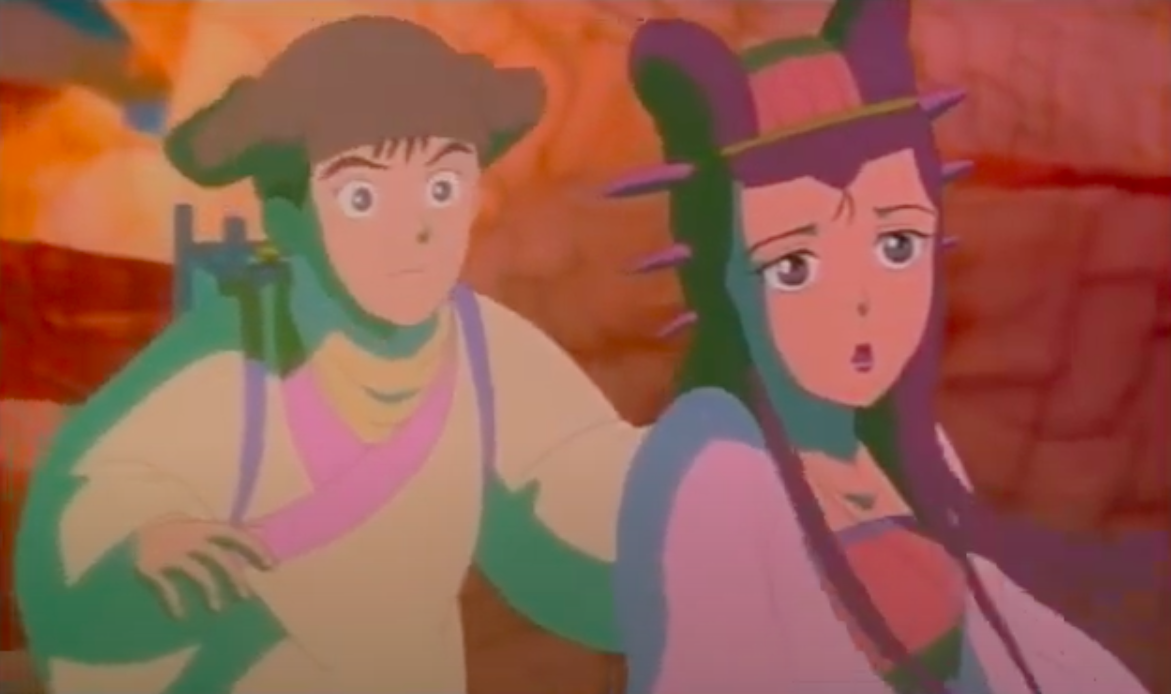
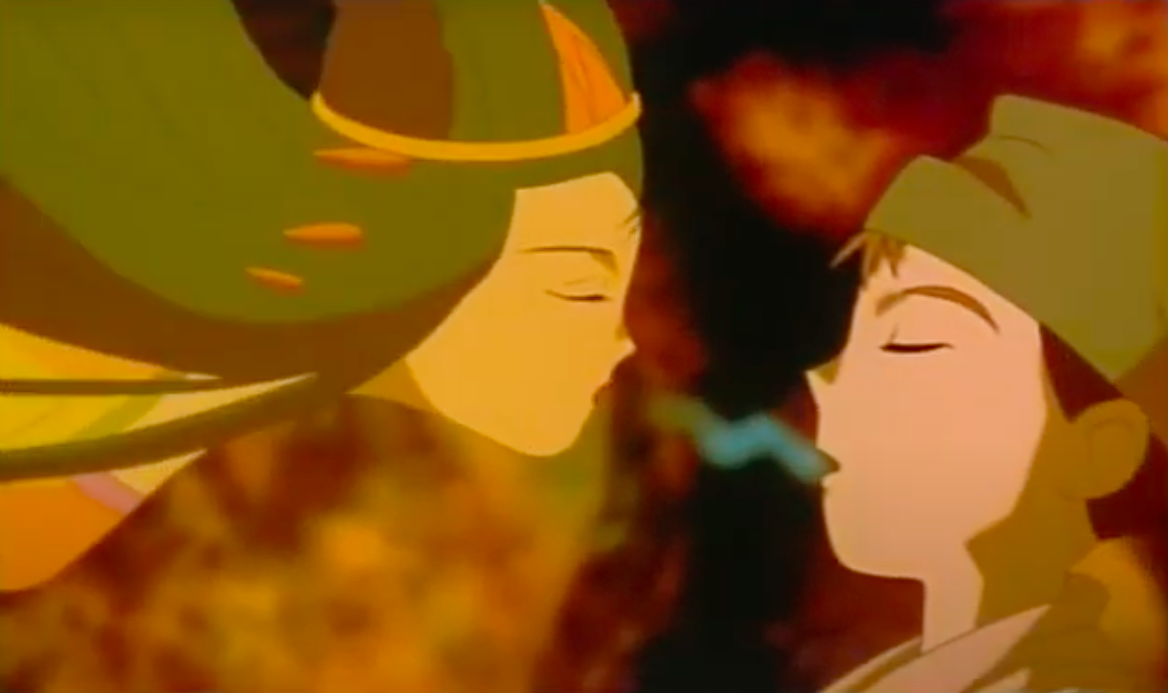
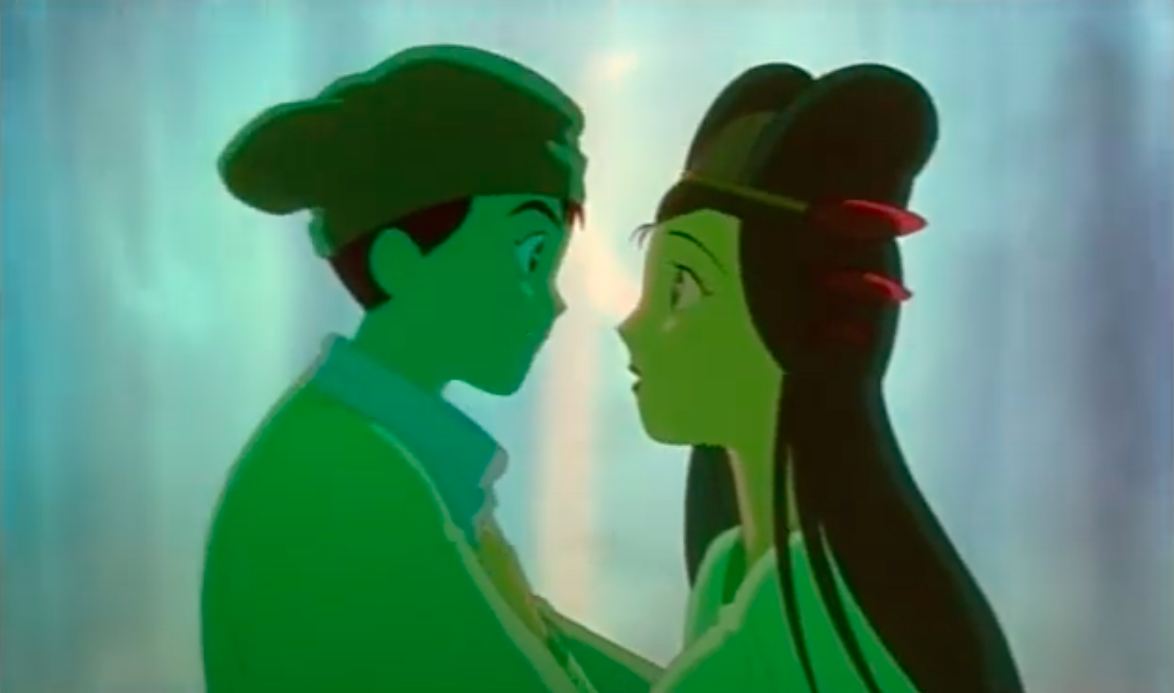
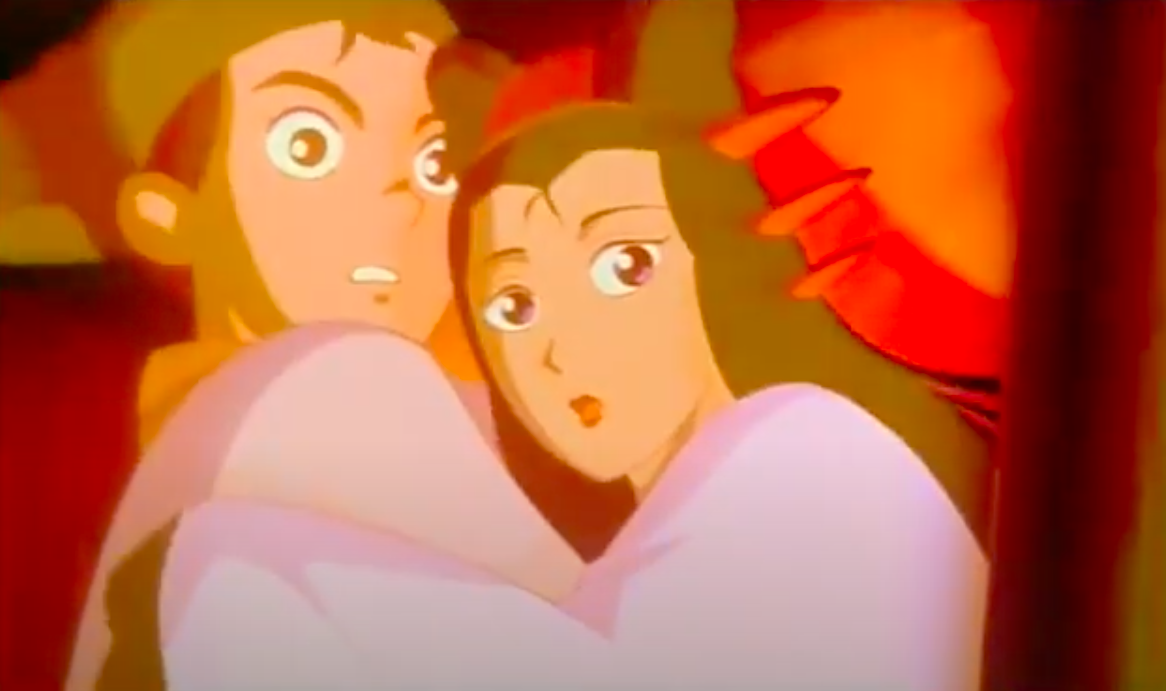
Whilst out painting in a park, painter Emu Hino witnesses a gang land execution. She sees the killers face and knows that she will be targeted next. That night, the killer find her but they make love as he recounts his tragic fate. However, the gang members of the earlier hit seek vengeance and so Hino and Yo escape and wipe out the threat.
This is a dramatic introductory episode which sets the stall out pretty quickly; there is plenty of blood spilt but the kills are stylishly done. There is also a lot of nudity and two sex scenes which have aged about as poorly as most sex scenes from the era but at least the angles are tasteful and it's not too fanservicey as the people are very much adults.
The Enemy Within
When Yo and Emu marry in a private Chinese wedding ceremony, they are attacked. Sensing a traitor within their organisation's ranks, Yo travels to Macau to get to the truth. He gets his man but Kiche, the sharp shooting assassin girlfriend, seeks revenge.
The episode starts with the marriage but the action escalates very quickly as an assassin attempts to kill Yo. From there we have an action packed episode featuring car chases, bombs, submarines and an island base. The battle between Freeman and Kiche is epic as they battle it out on top of the submarine.
Retribution
Emu proves her worth by not breaking after being tested by the 108 Dragons. Later on, Freeman and Bai Ya Shan are caught up in a plane hijacking from the African Tusk, a terrorist gang. When his base is attacked by the African Tusk and many in his leadership circle killed, Freeman goes on the silent offensive as the enemy think he has been killed too. He pretends to be a hairdresser in an exclusive resort and closes in on his enemy.
Meanwhile, Emu obtains the cursed Muramasa sword and goes to train with a master swordsman but Bai Ya Shan is worried about th curse and goes to dispose of it down a well. However, the curse breaks and accepts Emu.
This episode is quite good as Yo has the foresight to predict the enemy seeing his organisation as being weak. They die to protect him and so Yo goes all espionage to avenge their deaths. Africans have not always been portrayed well in anime or manga over the years, often being caricatures with exaggerated stereotypical features but here they are presented in a more complex light. The African Tusk are terrorists but Bugnug is a warrior with a sense of honour and pride. She and Freeman bond over their fighting skills and part as lovers, with him renaming her Dark Eyes.
The episode focusing on Emu becoming stronger by learning the way of the sword is a good one as we see her want to become more independent and a warrior in her own right. The sword dance she does is entrancing and quite beautiful in its own strange way.
The Hostages
When his daughter, granddaughter and son-in-law are kidnapped by the well trained KO (Kidnapper Organisation - which is a bit too on the nose for my liking), Mr Wong asks Yo for help, playing into the KO groups plan. Yo is aware of this and knows that there is a mole in their midst and so lets himself be captured in order to get close to the captives. On the island, he finds a militia and their leader, an erotically charged woman who wants Freeman as she gets off on killers.
The introduction of this is quite something as we get a minute or so of credits rolling over a writhing naked woman moaning gently. I'm glad my wife didn't walk in whilst I was watching that as I'd have a bit of explaining to do. It is the killer Nina but I didn't know that at the time. This is an intriguing episode as it discusses soldiers who arrive back from war but feel lost in a society that doesn't accept their deeds. However, Nina getting off on watching people being killed and her constant exhibitionism is annoying and very cringey. I was glad to see Emu and Bugnug appear and do their stuff to bring the house down.
The Impersonator
After being defeated by a huge and powerful man named Tohgoku, Dark Eyes is brutally abused and thrown into a river. Yo finds and rescues her and sets out in vengeance.
Freeman takes him on in the wrestling ring and is seemingly defeated, whereupon he is taken to the homebase to recover. He finds the real power behind the throne and sees that it is a cult leader who wants power to spread the word. He seeks to replace Freeman with a clone but Freeman kills the clone and pretends to be the clone instead, luring him into a trap and exacting revenge.
This is an exciting episode but one that features sexualised violence against Dark Eyes. She gets her revenge in the end but her abuse is brutal and she is discarded into the sea at the beginning. Surprisingly for such a macho series, Freeman seems to have a deep understanding of what love and trust is and fights against patriarchy and societal norms with his enlightened attitude.
The Russian Connection
When a Russian Mafia and Japanese Yakuza boss do a deal to join their forces and cut out the 108 Dragons, Freeman is not happy and fights back. However, when he sees Tanya, a woman he seems to recall in a past life, he tries to seek out the truth. Little does he know that the woman, Tanya, is a Russian trained as an assassin through the use of her body. When there is a bloody coup within the Yakuza, as a young wannabe takes over, he fights for ascendency amongst the Yakuza in his quest for power to defeat the 108 Dragons and take over as supreme crime lord of Asia.
The bloody coup is well realised as the old mob bosses are taken out by young up and comer Tsunaike. It's full of kills but, in the end, Freeman is just better organised and prepared than the crazy indiscrimate killing of mob boss wannabe Tsunaike. It's an intriguing plot about trying to squeeze the 108 Dragons out of their weapon sales arm of business but ends badly. Never bet against Freeman though.
Overall, even though the series has aged quite badly as the animation is quite static and the constant nudity embarrassingly gratuitous, the soundtrack is pretty good and the way the series explores the psychological impact of violence and the struggle for identity is compelling. The kills are interestingly done and remind me of Agent 47 in the Hitman videogame series. Additionally, we have a tragic figure in Freeman whilst Emu is a strong female lead which adds another layer of complexity to this ultra violent and hyper-sexualised series.
Crying Freeman is considered a classic for a reason. It's a must-watch for mature anime fans who appreciate complex stories, but be warned: it's not for the faint of heart. Consider yourself cautioned.