Death: The High Cost of Living - TV Episode Review

I finished the entire Netflix run of The Sandman and the final episode was Death: The High Cost of Living. I was very excited to watch the episode that was alluded to in The Sandman #21, was released as a three part comic series and collected as a graphic novel where:

'... one day in every century Death takes on mortal flesh, better to comprehend what the lives she takes must feel like, to taste the bitter tang of mortality that is the price she must pay for being the divider of the living from all that has gone before, all that must come after.'

I read this specific comic book about 20 or so years ago and remembered that it was about Death getting to walk the Earth to understand people better. It was a deeply humanist work and I had loved it at the time. This adaptation uses that template as a springboard and successfully modernizes the narrative, crafting a bittersweet tale that is both a faithful tribute to its source material and a resonant reflection on contemporary anxieties.

The episode's emotional core lies in the unlikely pairing of Death (played with warmth by Kirby Howell-Baptiste) and Sexton Furnival (an excellent Colin Morgan aka BBC’s Merlin) a depressed journalist teetering on the brink of suicide after feeling an overwhelming sense of despair at the state of the world.

Their journey begins as a reluctant chase, with Sexton fleeing the very figure he sought. However, it quickly evolves into a transformative quest as Death, in her guise as a mortal woman, gently nudges Sexton to confront the very reason for his despair: the world's irreparable brokenness.

Through their interactions, the narrative artfully suggests that even amidst horror, life's small, beautiful moments—a shared conversation, a simple act of kindness, a fleeting taste of happiness—are what make the experience worthwhile. This relationship is the vehicle for the episode's core message: that connection, even in a world filled with suffering, is the antidote to despair.

Howell-Baptiste brings a fresh, vibrant and profoundly empathetic energy to the character of Death. Her portrayal perfectly captures the character's paradoxical nature: she is both an ancient, all-powerful cosmic entity and a genuinely kind-hearted young woman who sees the beauty in every life, no matter how short or unremarkable. This warmth is crucial to the episode's tone, which, despite its heavy themes, never feels preachy or overly sentimental.

The show's direction and writing embraces a style that makes the mundane moments of the day feel special and significant, like the joy of a veggie wrap near a canal on a sunny day, or the throbbing lights from a nightclub.

Ultimately, Death: The High Cost of Living is a timely meditation on finding meaning in a world that often feels meaningless. It serves as a gentle reminder that the bitter tang of mortality, as the price for being alive, is inextricably linked to the sweet joys of existence. It challenges the viewer to embrace the fleeting nature of life, not as a cause for fear, but as a reason to cherish every moment and every connection. It challenges assumptions that there are just good and bad people; life is not binary and people are more complex and nuanced. As Death contemplates her immortal existence, she says, "You're human... you forget what it's like to not have free will." To be human is to suffer but also to have great joy, wonder and awe.

This episode provided a much-needed balm for the soul, offering a message of hope and resilience that resonated deeply with me during these increasingly troubled times.

The Evolving Fears of a Horror Gamer

In this most spooky of months, I've been thinking about the horror genre in gaming. I remember a time when horror in videogames was a simple affair. Jump scares, grotesque monsters and oppressive environments were the tools of the trade. I'd jump when zombie dogs burst through a window in Resident Evil, and the creaks and groans of a foggy town were enough to keep me on edge in Silent Hill. But as I've gotten older, my relationship with fear has changed. The horror that truly gets under my skin now is more subtle, more cerebral. It's less about what's lurking in the shadows and more about the unsettling ideas that burrow into my mind and trouble my sleep.

Cosmic Horror and Existential Dread

Gone are the days when I'm solely afraid of the big bad or boss monster. The idea of being utterly insignificant specks in a cruel and pitiless universe ruled by indifferent elder gods doesn't scare me much now but it did back in the day. Games like Eternal Darkness on the Gamecube nailed this feeling though by making you feel completely alone against forces beyond human comprehension. More recently, The Call of Cthulhu game on PS4 that I played and completed also perfectly captured the idea of a terrifying cosmic mythos with devout followers. However, games like Alan Wake and Control, the Remedy-verse if you will, played with the idea of cryptids, blending them with the everyday to make the world feel less stable. Another, more recent example, was in the game Still Wakes the Deep, where the protagonist tries to escape a malevolent creature that is accidentally disturbed as the seabed is dug by an oil rig. While trying to escape the inevitability of his fate, the protagonist finally decides to sacrifice himself to save the world by ensuring the creature never makes landfall. The last action is 'Let Go' which was a bold thing to ask in a videogame where agency is the medium's main draw.

Surprisingly, one of the most potent applications of cosmic horror was in Night in the Woods. The game started off as an introspective look at a returning figure who left under a cloud and turned from a simple story about ‘finding your people’ and evolved into a poignant cosmic horror about the slow death of small-town America and its effect on the soul of the people that remained. Wow! It made me look at my leaving my old town of Barking differently - not that I've seen sights of any cosmic horror, just gentrification which I’ve been told is not the same thing.

The close cousin to cosmic horror is existential dread which often asks the biggest, most terrifying questions about our existence. Soma was a masterclass in this, forcing you to grapple with what it truly meant to be human and whether consciousness was tied to the body or something else entirely when it is revealed very early that you were a mind inside a robot body and your consciousness had been uploaded.

As a gruff, but less buff, older dad, The Last of Us and God of War (2017) tapped into the parental fear of loss of a child and the weight of past decisions. For a similar reason, The Walking Dead Season 1 was so impactful as it was about the fear of dying and leaving a (surrogate) child unprotected in a cruel, uncaring world. Even seemingly whimsical games like Zelda: Majora's Mask were built on the foundation of existential dread, as the moon was constantly about to crash and end all life. Finally, Nier Automata took this to a whole new level with its philosophical, suicidal robots, forcing you to question your purpose in a machine-driven world.

Non-Euclidian Spaces and Strange Liminal Places

There is something deeply unnerving about a space that defies logic. The mind rebels against a world that doesn't follow the rules it knows, and this is where Non-Euclidian Spaces and strange liminal spaces come in. In the videogame Kairo, I wandered through cyclopean buildings with bizarre geometry, which created a sense of being lost and disoriented. The repetition and alterations of the same space was effectively mined by Mark Z. Danielewski in his masterful book House of Leaves and Guillermo Del Toro and Hideo Kojima effectively looked at this concept further with PT, where the corridors around you changed in an unsettling way. More recently and importantly, more accessibly, Control used the uncanny nature of the Oldest House to great effect, linking strange, unsettling spaces to our everyday world. Even older games like Zelda: A Link to the Past's Forest of Time or the Haunted Mansion in Super Mario World played with this concept on a more basic but subtly unsettling way.

Corporate Indifference

As an older statesman, I’ve found a new fear in the cold, uncaring nature of large corporations, oligarchs and tech bros. It’s the idea that your life, your very existence, is a mere byproduct of a grand machine that doesn’t care about you at all. Amnesia: A Machine for Pigs and Alien: Isolation captured this perfectly, treating you as a mere cog in the mechanization of labor, all in first person. Meanwhile, Bioshock was a cautionary tale about a fallen utopia built on a foundation of corporate greed and indifference. Finally, the much underrated Tacoma told the chilling story of astronauts who are simply given up for dead by corporate bigwigs. It was a subtle but deeply unsettling horror of realising that you would die and that no-one above you in management cared or ever did. 

Body Horror, Gore Porn and Real World Violence

Some fears are just primal. The gut-wrenching feeling of being trapped in a confined space with something horrifying, as in Dead Space, is timeless but that eyeball scene in Dead Space 2 was a masterclass in making you squirm in your seat. The horrifying transformation in Inside, where you become an amorphous blob, tapped into our deep-seated fear of losing control over our own bodies in hideous Tetsuo-ness. However, the greatest use of real world violence was when a knife was thrust into my right hand in VR in Resident Evil 7. My friends and I were grossed out and the effect was terrifying as it happened within the first 30 minutes of the game which gradually escalated the violence.

However, as I get older, I find myself more afraid of other people than I am of external, existential terrors that most probably don't exist. The  monsters exist, and they are often human-shaped, wear suits and hold positions of responsibility and respectability. Games like Decarnation, Haunting Ground, Clock Tower and Silent Hill 2 explored the horrors of violence against women and entrapment. Deadly Premonition and Year Walk delved into the ritualistic and folk horror that can be rooted in very real, very human traditions and doctrines.

Confronting individuals or groups who are so utterly convinced of their own righteousness and destiny when they cannot be reasoned with is terrifying. They believe that their path, often involving self-destruction, violence, or the annihilation of others, will lead to a higher state of being—a 'cosmic bliss' reserved only for the select few.

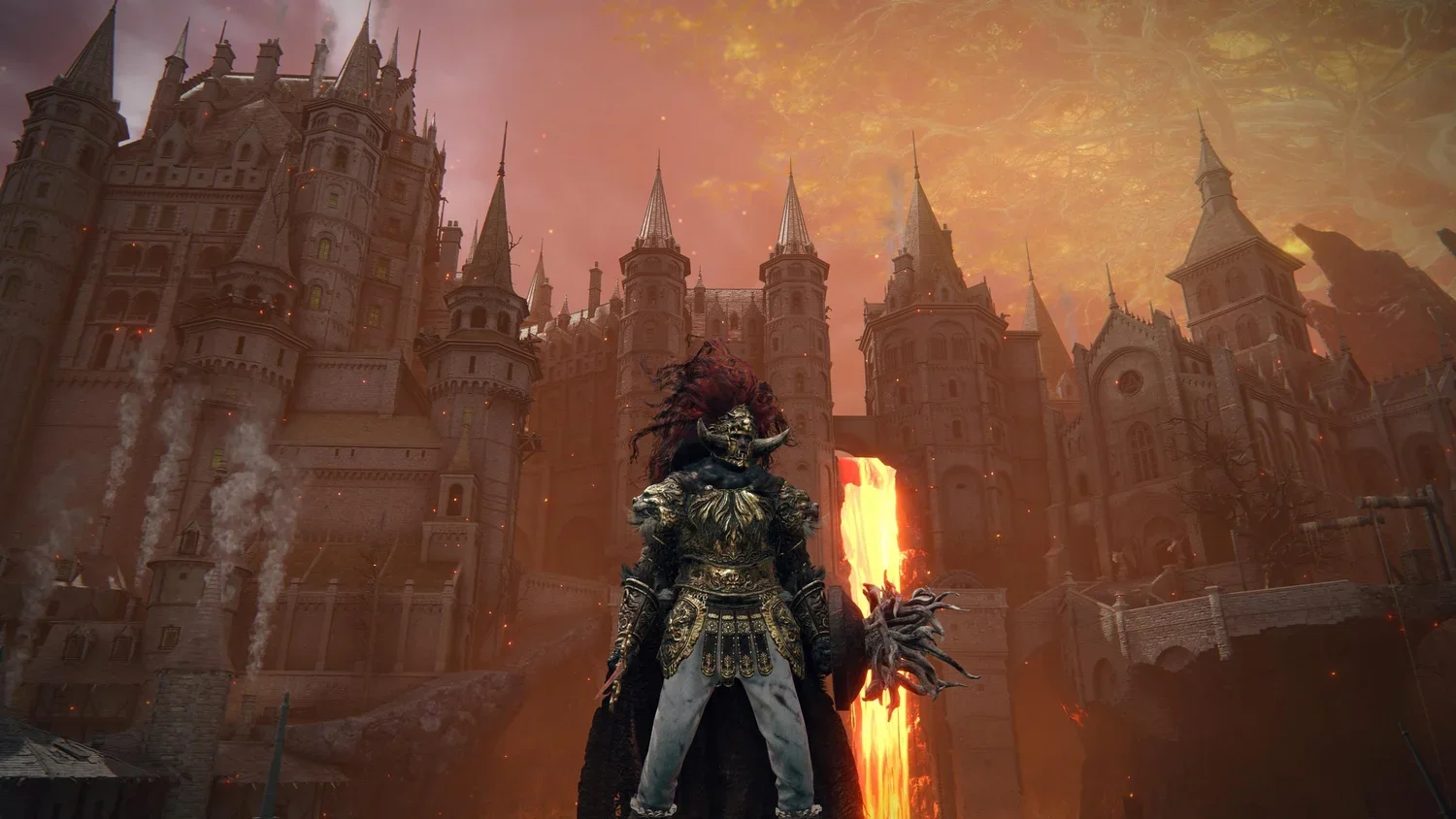
Elden Ring had an example in Dominula, the Windmill Village, where the people were dancing around maypoles covered in beautiful pink flowers and there are crosses scattered around. I remember being really scared of this area as it felt creepy and otherworldly, like Summerisle in The Wicker Man or other folk horror films; I was a trespasser and did not belong in this land.

The horror of the eschaton - the belief in the end of the world as a necessary prelude to a new, perfect one - is more common that we might think. Real world examples of those who sought cosmic bliss are available and easy to find through the myriad cults and extreme belief systems that still persist. When people actively seek out the end times, they are no longer passively afraid of a coming apocalypse but they become active participants in bringing it about through whatever means possible.

We live in interesting times but those who are actively seeking the end-times are the scariest creatures of all; these are not fearful, unknowable cosmic creatures but Man. Man’s evil against his fellow man are reflections of the darkness that can exist within us.

How do you reason with a belief system that sees the world and the people in it as mere obstacles to be removed or sacrifices to be made on the road to utopia? Now there’s a conundrum…anyways, I’m off to play Pacman. Wish me luck against the Inky, Blinky and Clyde. Nite!

LINK: Decarnation: Videogames As Art

LINK- Toxic: Women, Fame and the Noughties- Book Review (and Some Thoughts)

LINK- Pure Invention: How Japan's Pop Culture Conquered the World- Book Review (and Personal Reflections)

LINK- The Rise of Retro Gaming During Covid

LINK: Japan: My Journey to the East

LINK- Blood, Sweat and Pixels- Book Review

LINK- Utopia for Realists- Book Review

LINK- On And On And Colston ( Or, How We Kinda Sort of Learned to Talk About the Legacy of Colonialism and the British Empire)

LINK- ‘Natives: Race and Class in the Ruins of Empire’ LINK: Elden Ring- Videogames As Art

True Detective Season 1 - Cult TV Review

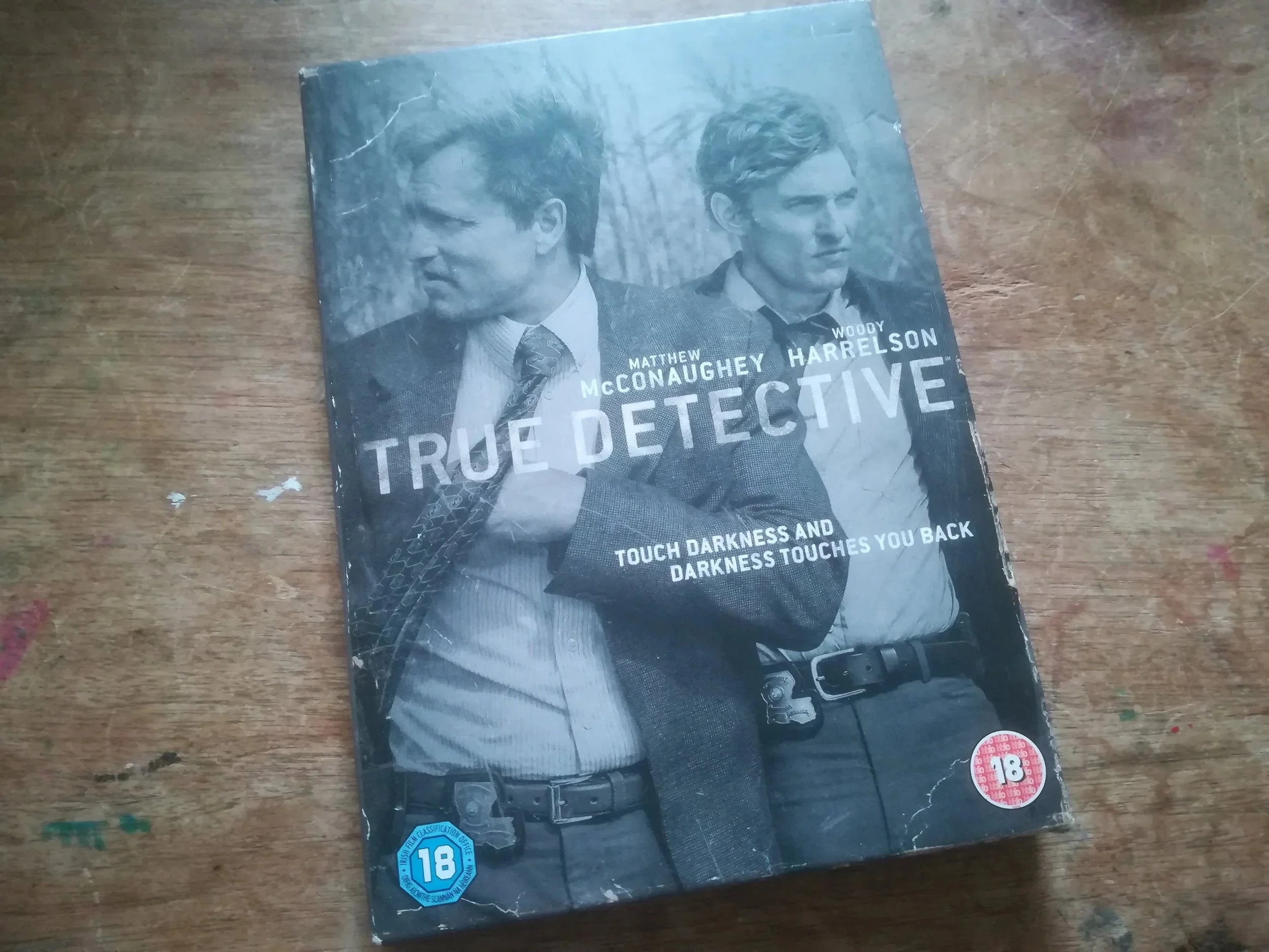
It's funny how some of the best discoveries happen when you least expect them. Just recently, whilst handing in some donations at the local Oxfam, my eye caught something unexpected: the True Detective Season 1 DVD set, priced at a mere £3.99. I'd never actually seen the show, despite knowing of it and having heard a lot of praise showered upon it over the years. It felt like a sign, a little nudge from the universe to finally see what all the fuss was about.

True Detective Season 1 DVD Review

Not bad for £3.99 eh?

Beyond the general acclaim, what truly piqued my interest were the whispers I'd heard about its thematic depth and atmospheric qualities. I'd heard comparisons to The King in Yellow, the unsettling cosmic dread of Robert W. Chambers' work, which immediately resonated with my love for the uncanny.

Then there were the mentions of Twin Peaks, a show that masterfully blends surrealism with small-town mystery, Alan Wake, with its dark, psychological horror wrapped in a literary narrative and Deadly Premonition 2 with its wizened old main character flashbacking to the case that broke him. The recurring theme of Southern Gothic also tickled my fancy, promising a rich tapestry of decay, dark secrets, and a unique sense of place. All these elements are firmly in my wheelhouse, so the decision was made. For less than the price of a fancy but ultimately disappointing coffee, I was ready to dive into what promised to be a journey into the heart of darkness, Louisiana style.

The anticipation of seeing how these influences might manifest, how the show would weave together a compelling narrative with such rich thematic undertones, was palpable. So, with the DVDs in hand and expectations set high by a confluence of critical acclaim and personal genre preferences, I plonked myself down for my first viewing of True Detective Season 1. So, how was it?

The story stars Matthew McConaughey, playing Detective Rust Cohle, and Woody Harrelson, playing his partner Detective Martin Hart, who are investigating a series of disturbing, ritualistic murders in Louisiana. This quickly spirals into a much larger and darker narrative involving occult practices and a deeply unsettling meta-psychotic killer. The show is a police procedural but with unreliable narrators abound, it is a show that demands attention.

Over the course of 8 episodes, the show masterfully weaves together different timelines and perspectives as they pursue a killer tied to the unsettling concept of The King in Yellow, Carcosa and The Green Man. This all leads them down a rabbit hole of existential dread and profound psychological instability. Cohle's nihilistic and philosophical outlook is a defining characteristic, contrasting sharply with Hart's more grounded, family-oriented perspective (until his penchant for affairs that is). As both men delve deeper into the dark heart of man they find themselves forever changed.

I has always heard that the show was known for its complex themes, atmospheric storytelling, and powerful performances but boy, was I blown away by the beautiful cinematography and sense of place. It's always a hoary old thing to say that 'the setting is a character' but in this case, Louisiana sets the sweaty, uncomfortable mood perfectly. It's uncomfortable conditions, with its portrayal of different lifestyles and wealth, are evocative portrayed by the character actors with deep, meditative silences adding to the palpable terror of what will be found at journey's end. The make-up team does an outstanding job of aging and de-aging up the protagonists, especially McConaughey who looks all haggard and wrinkly, but Woody Harrison's wig, which he wears for his youthful flashbacks, are hilarious as his de-aging process just seems to involve him whipping the rug off.

Over the course of a few nights, I watched the entire season and loved it. I can see why the series is so well regarded and put forward as a keystone in the Golden Age of Television that many believe started with The Sopranos.

The McConaissance hype is real as it was amazing to see McConaughey show his acting chops after spending the best part of a decade leaning against stuff and looking cheekily at the young starlet over his shoulder. I will now look at watching the other series to see if they can live up to the very high benchmark set here but, from what I gather, this was the zenith that has yet to be surpassed.

LINK: The King in Yellow- Book Review

LINK: Japan: My Journey to the East

LINK: Blood, Sweat and Pixels- Book Review

LINK: The Offworld Collection- Book Review

LINK: Shadow of the Colossus- Book Review

LINK: Manga Exhibition at the British Museum

LINK: The Midnight Library and the Idea That You Can’t Go Home Again

LINK: The Transportive Nature of Objects (And the Power of Mini Consoles)

LINK: My One True Gaming Constant in Life- Nintendo

The Sandman I to III - Audiobook Review

Neil Gaiman's The Sandman comic series is a monumental work, having garnered 26 Eisner Awards and frequently hailed as the “Shakespeare of comics." Fans have long clamored for an adaptation that could do it justice and, while the Netflix series has recently successfully brought the world of the Dreaming to the small screen, Audible took a different approach, transforming the iconic comic series into an immersive, full-cast audio drama over the course of a couple of years. As a long-time fan, I was intrigued to see how a graphic novel would translate to an audio-only format. Having now listened to all the available installments, I can confidently say that this adaptation is a magnificent achievement that captures the essence of Gaiman's epic tale.

Gaiman himself is the narrator and, along with an all-star cast, the production elevates the text with lush soundscapes, cinematic music, and a meticulously crafted sound design. The dialogue remains almost verbatim from the comics, with a few descriptive additions to help listeners navigate the visual-heavy world of the Dreaming. This faithful approach, combined with the late 1980s setting, gives the adaptation a timeless quality that feels both classic and groundbreaking.

The first Act of the audiobook adapts the initial three volumes of the graphic novels: Preludes & Nocturnes, The Doll's House and Dream Country. It introduces us to Dream of the Endless, also known as Morpheus, who is captured and imprisoned for decades by a cult on Earth. After his escape, he embarks on a quest to reclaim his lost tools of power and restore his kingdom, the Dreaming. This first act establishes the world and lore with a wonderful mix of foreshadowing and compelling storytelling. The voice performances are largely excellent. James McAvoy is a standout as the brooding and enigmatic Morpheus, while Michael Sheen's Lucifer and Taron Egerton's John Constantine are pitch-perfect. However, a word of caution: the audio version of the ‘24 Hours’ storyline is particularly intense and more disturbing than the TV series, staying true to the often graphic nature of the original comic.

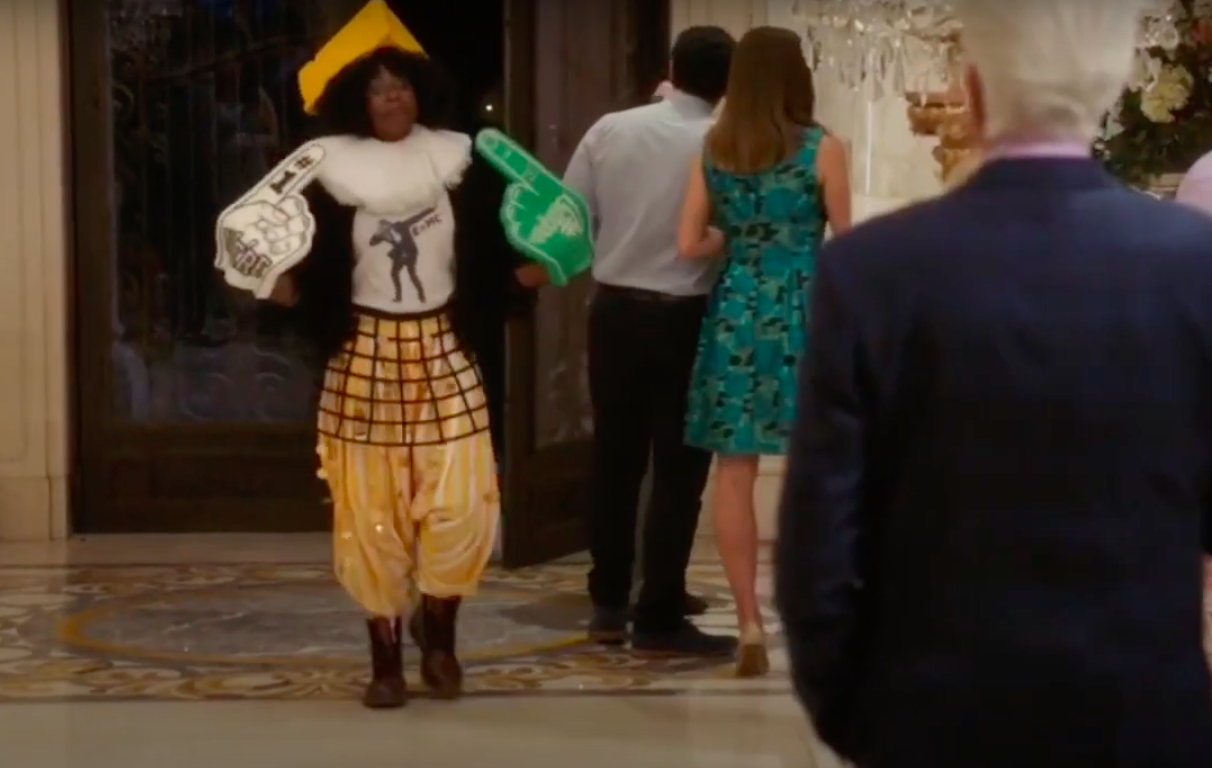
The second Act weaves together pivotal arcs including Season of Mists, A Game of You and Distant Mirrors. Morpheus's search for a new ruler of Hell after Lucifer abdicates their responsibilities and Barbie's heroic quest to save the Dreaming are highlights, brought to life by a host of new and returning talent. The episode Thermidor, which adapts issue 29, is a rare instance where the audio version might even surpass the comic. This is down to the performance of Orpheus by Regé-Jean Page, which, when combined with director Dirk Maggs' vision and James Hannigan's score, makes his song a truly must-experience moment. The rest of the new cast is equally impressive, with John Lithgow and Brian Cox as Emperor Norton and Augustus, and Bill Nighy and David Tennant as Odin and Loki, delivering dynamic and entertaining performances. Kristen Schaal is also a fantastic fit for Delirium, capturing the character's erratic charm perfectly. When I heard she was cast I knew she would blow it out of the water as her vocal work in Bob's Burgers and, my favourite, Gravity Falls has been outstanding. But while the casting has been largely brilliant, one performance stands out as a personal disappointment and that is Kat Dennings' Death. Although Dennings is a good actress, her portrayal feels flat and devoid of the warmth and compassion that Kirby Howell-Baptiste brought to the role in the television series (and it's not just because I've had a crush of her ever since I saw her wearing a cheese hat in The Good Place). In the audio version, Death often sounds bored or annoyed. Iconic and heartbreaking scenes, like the death of an old violinist or a baby with Sudden Death Syndrome, lack the emotional weight they carry in the comics and TV show. In these moments, her performance falls short, leaving a noticeable void where empathy should be. Maybe that's me but that was how I felt when I first heard the audiobook and after I have seen the TV adaptation.

The Good Place is amazing and was the first time I came across Kirby Howell-Baptiste.

The third and final installment (so far) covers the graphic novels Brief Lives and The World's End. It begins with the masterful prelude, The Song of Orpheus, which serves as a powerful setup for this Act's themes of love, loss, and consequence. This season delves into the tragic relationship between Morpheus and his son, Orpheus, as Dream embarks on a journey of redemption. It's a compelling and fitting prelude which foreshadows the finale. This season ends with Morpheus accepting his coming fate at the hands of the Kindly Ones after spilling family blood for the greater good. It is a powerful and tragic tale of toxic family structures and how they affect life going forward but also, in the case of Morpheus, it is possible to break the cycle of abuse- but it often comes at a great personal cost.

Overall, the Audible adaptation of The Sandman is a remarkable achievement as it honors the source material with its faithful dialogue and rich production, offering a compelling experience for both long-time fans and newcomers who are prepared for the darker elements. The overall production quality and the strength of most of the performances make this an essential listen for anyone captivated by Gaiman's extraordinary universe. Despite a few minor quibbles, the casting is spot on, and the series offers a phenomenal new way to experience this classic saga. We can only hope that we get the final act that this incredible series deserves, as The Sandman truly deserves the sleep of the just.

However, with the allegations against Neil Gaiman ongoing, I think it unlikely that we will get the closure we would like as he is the narrator of the audiobook and that is problematic to say the least.

Oh well- that is right and just do we'll have to wait and see but, in the meantime, we have the excellent TV series, phenomenal comics and most of the excellent audio books versions to appreciate.

Levelling Up Your Look- Clothing in Games

Clothes, in both the real and virtual worlds, are far more than just fabric and pixels. They are a powerful tool for self-expression, a way to enhance a narrative and a means to deepen player engagement. Just as many people find joy in experimenting with their real-world wardrobe, a deep satisfaction comes from tailoring an in-game appearance.

In an era where personal branding extends even to our digital footprints, the ability to customize an avatar's attire becomes increasingly significant. Why settle for bland when you can craft a character that truly reflects your personality, your mood or even an aspirational version of yourself? This freedom is particularly potent in games where you'll be spending tens, if not hundreds of hours with your virtual counterpart. Your avatar becomes an extension of you, and their clothing is a primary means of communicating their—and your—identity within the game world. 

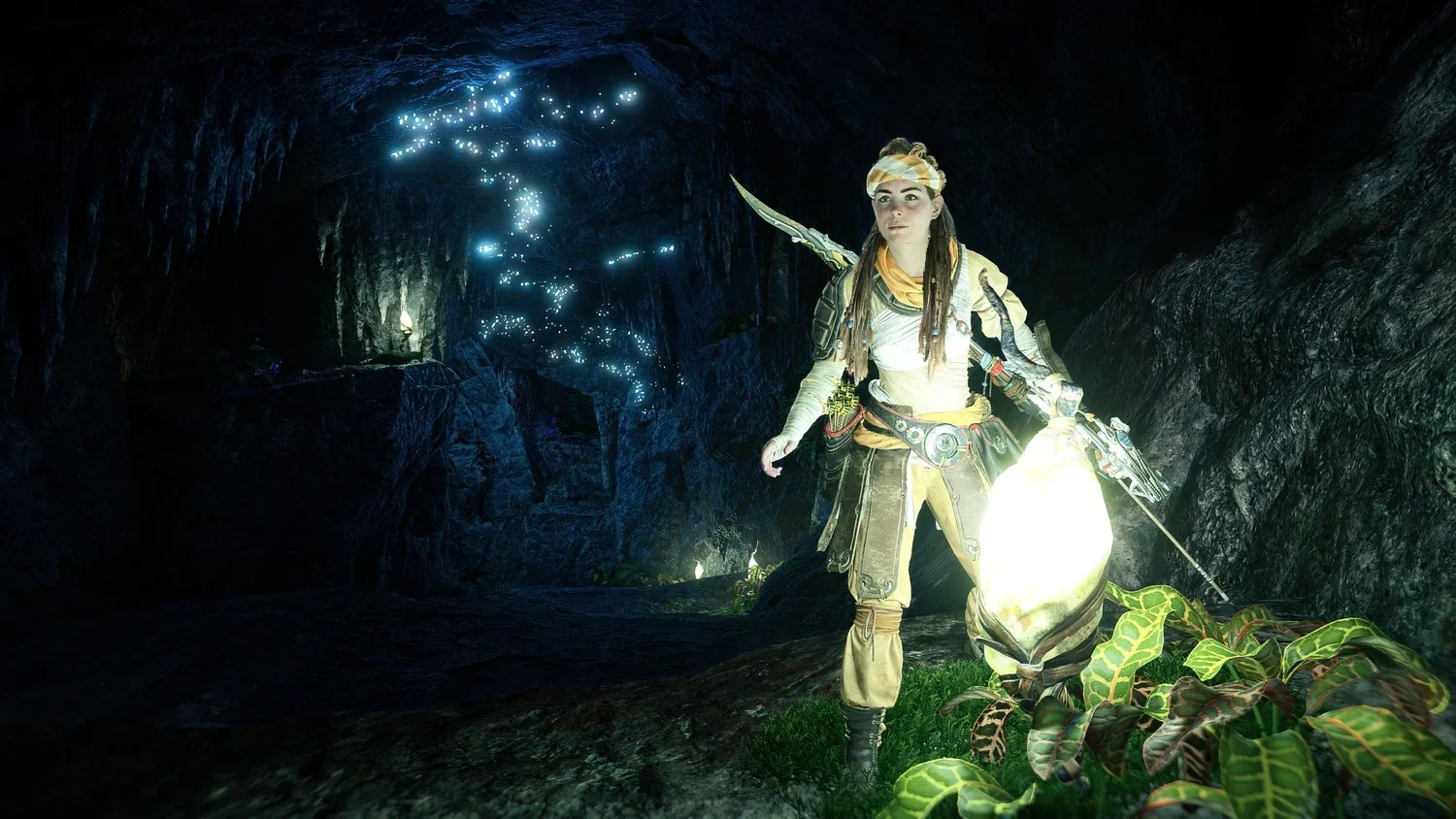
This resonates deeply with my own journey; after years of ‘milquetoast’ choices for my in-game characters, I've recently embraced creating unique and exciting avatars, recognizing that if I'm going to spend hours with them, they might as well be fun. While some games, like Expedition 33, offer purely cosmetic customization, others demonstrate how clothing can be intrinsically linked to gameplay and progression. Take the Princess Peach Showtime! example; each costume change not only looks adorable but also directly alters Peach's abilities, adding an exciting layer to the gameplay that my daughters and I eagerly anticipate. Similarly, games like the Soulsbourne series show how new outfits can serve as: rewards for achievements (unlocking exclusive attire for completing challenges), storytelling devices (denoting allegiance, class or foreshadowing events), player expression of lore (deepening immersion through authentic choices) and social signifiers (indicating dedication, wealth or participation in events in multiplayer games). 

The act of ‘dressing up’ an avatar taps into several psychological desires. It's a low-stakes environment to experiment with identity, much like my university days marked a significant shift in my real-world fashion. 

In my formative years, I prioritized fitting in, but a friend's observation that my clothes (Farah trousers before they were cool again and Bill Cosby jumpers before they became problematic by proxy) didn't represent me spurred a more experimental approach. This continued into my university and teaching career, where I embraced curated, louder pieces from T. K. Maxx combined with fewer but better quality everyday pieces, so much so that my wife-to-be jokingly called me Malvolio, after Shakespeare's famously flamboyant character.

Virtual spaces offer a liberating canvas for sartorial expression without the fear of judgment that can accompany real-life fashion choices. It allows for a playful breaking of inhibitions which seems to have come to the fore post-pandemic. However, embracing your ‘true’ self in an increasingly always-online world, dressing in a way that truly marks you out, can feel like a seditious act, especially when an unwillingly filmed clip or photo can go viral and publicly shame you. However, within games, it's safe to be Malvolio, if you so choose, without that risk. 

I bought these books in my late teens and the fearless Harajuku fashion blew me away and made me want to be brave with my dress sense.

It's truly great to witness people embrace dressing how they want online, not harming anyone but simply expressing themselves. The continued evolution of gaming will undoubtedly see even more sophisticated and integrated systems for clothing and customization, enhancing the already rich tapestry of digital self-expression and I’m all in!

LINK- Japan: My Journey to the East

LINK: Harajuku Fashion

LINK- The Future Starts Here: An Optimistic Guide to What Comes Next- Book Review

LINK- On And On And Colston ( Or, How We Kinda Sort of Learned to Talk About the Legacy of Colonialism and the British Empire)

LINK- Nintendo: My One True Gaming Constant

LINK- Let’s All Create a ‘New Normal’.

LINK- An English Geek in Saudi

Fireworks - Cult Manga Review

For fans of Shunji Iwai's distinctive cinematic style, the 2017 anime adaptation of his 1993 television special, Fireworks: Should We See It from the Side or the Bottom? feels like a beautiful and unexpected gift. As a long-time admirer of his work, which I first discovered through the cult classic Picnic, I was delighted to find this animated reimagining. I hoped it would capture the earnest spirit of his original vision while expanding it into something new.

The film, now titled simply Fireworks, is from Shaft Studios and Director Akiyuki Shinbo. This adaptation takes a 30-year-old story and turns it into something new yet familiar. It's a time-loop romance centered on two teenagers: the carefree Norimichi and the emotionally burdened Nazuna, who is grappling with her mother's impending remarriage and a forced move away from her friends. The story cleverly uses a magical, glowing orb to explore "what if" scenarios, allowing Norimichi to repeatedly alter events in a bid to change Nazuna's fate. This narrative device, reminiscent of films like Sliding Doors or Mr. Nobody, delves into the complexities of choice and the longing for a different outcome.

What truly elevated this film for me was its breathtaking animation. The vibrant colors and fluid character designs create a dreamlike atmosphere that perfectly complements the story's fantastical elements. Each scene is a work of art, from the sun-drenched coastal town to the mesmerizing spectacle of the fireworks themselves. This visual feast is expertly paired with an emotive and memorable soundtrack that enhances the film's poignant moments, pulling the viewer deeper into the characters' emotional journeys. The main protagonists are simply characterized and, aside from a few juvenile moments from the male students, are quite innocent and endearing.

Fireworks is a poignant meditation on first love, regret, and the paths not taken. The film's earnestness and stunning artistry make it a compelling watch that will resonate with anyone who has pondered the choices that shape their lives. While it might not reach the epic emotional heights of modern classics like Your Name or The Girl Who Leapt Through Time, Fireworks should be judged on its own merits. It doesn't need to be a masterpiece to be worth your time.

Ultimately, this animated version is a testament to Shunji Iwai's enduring talent for crafting stories that are both deeply personal and universally relatable. For that, it stands as a worthy addition to his body of work.

LINK: For the Love of Shunji Iwai

LINK- The Anxious Generation: Book Review (and Some Thoughts)

LINK: Japan: My Journey to the East

LINK- Utopia for Realists- Book Review

LINK- On And On And Colston ( Or, How We Kinda Sort of Learned to Talk About the Legacy of Colonialism and the British Empire)

LINK- ‘Natives: Race and Class in the Ruins of Empire’ LINK: Elden Ring- Videogames As Art

LINK- Toxic: Women, Fame and the Noughties- Book Review (and Some Thoughts)

LINK- Pure Invention: How Japan's Pop Culture Conquered the World- Book Review (and Personal Reflections)

Juniper Mae: Knight of Tykotech City - Graphic Novel Review

Juniper Mae: Knight of Tykotech City is a beautifully written and illustrated graphic novel from Sarah Soh that has quickly become a favorite in our school's graphic novel club. As the club leader for Year 4 and 5 pupils, I've found that comics and graphic novels are a fantastic way to engage reluctant readers, and this book is a perfect example of why.

The story introduces us to the whimsical world of Tykotech City and brilliant young inventor, Juniper Mae. Her passion for building gadgets and her dream of advancing the city are instantly captivating. The plot kicks into high gear when the city's power is mysteriously stolen, pulling Juniper into a thrilling investigation to find the culprit.

Although the book is aimed at children, the compelling story and endearing characters make it an enjoyable escape for readers of all ages. The artwork is a major highlight, masterfully combining the edgy cyan blues of the techno-city with the warm, autumnal hues of the forest. The Cal Arts-style illustrations, with their anime influences, create a cohesive and visually stunning world.

One of the novel's greatest strengths is its heartfelt message, delivered through sweet and relatable characters. Juniper, an empathetic and resourceful heroine, leads the reader on a brilliant adventure. The story concludes with a gripping cliffhanger, leaving all of us eagerly awaiting the next installment.

Overall, Juniper Mae is the perfect gateway for reluctant readers, bridging the gap between comics and more traditional novels. It's a highly recommended adventure that you won't want to miss.

The Wonky Heart of Emulation: A Nostalgic Look at Gaming's Folk Movement

For many of us approaching middle age, the mid-1990s was a time of discovery. It was a period when the vast, previously inaccessible landscapes of videogaming were opened up not by corporations, but by a folk movement of unbelievable cultural generosity. The catalyst? Emulation.

Back in the day, it felt like having the whole of retro gaming in your hand.

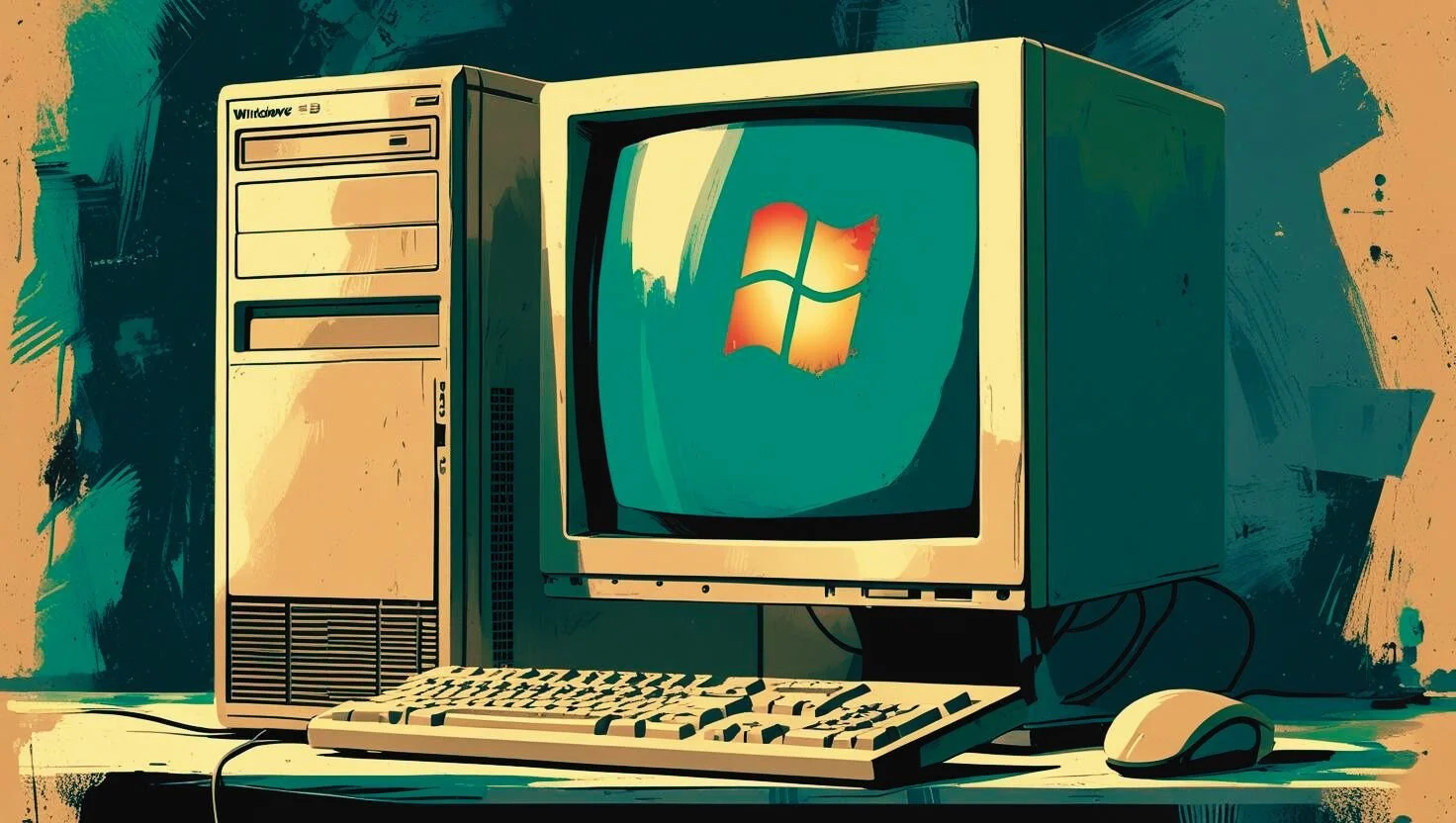
Previously, gaining access to all of gaming across the numerous systems and consoles would have required considerable financial investment but, with the rise of Frankenstein PCs, which became popular in the mid-90s, one machine could now do it all! Thanks to a galaxy of distinct emulators—each with its own strengths, weaknesses and weird quirks—we were able to explore the rich history and back catalogue of gaming. This wasn't a slick, polished experience; it was a grassroots movement with a certain hacker-like identity. 

I remember the thrill of each new emulator version, the incremental improvements, the bug fixes that turned a graphical glitch into a moment of pure gaming nirvana on my AMD Athlon something something. At university, this was the backbone of hundreds of hours of entertainment, all run from a memory stick onto a cobbled-together PC using some ropey third-party controller (I’m looking at you Logitech exploding submarine controller). It was a community forged in the shared experience of this DIY bodging and puerile names for the emulators, my personal faves being NESticles and Handy.

We weren't just playing games; we were participants in a collective act of preservation and technical appreciation, although we wouldn't know it at the time. We were just cheap poor students living for the moment and reflecting on the nostalgia of our youth in the cheapest way possible.

Today, the scene is undoubtedly better, in many respects. Slicker UIs, out-of-the-box retro consoles (like the Pandora or mini consoles), and Raspberry Pi emulation have made retro gaming more accessible than ever. But as we enjoy these seamless, curated experiences on our flatscreen TVs, it's worth a moment to remember what was lost. We traded the incremental victories and the charming, wonky heart of the early emulation scene for convenience. And while that's not a bad thing, there's a part of me that will always be nostalgic for the days when getting a game to run on an emulator was an achievement in itself and the strange glitches that would happen a unique surprise.

LINK- Vintage Arcade Machines in the Wild

LINK- The Golden Voyage of Sinbad- Cult Movie Review

LINK- The 7th Voyage of Sinbad- Cult Movie Review

LINK- Into the Unknown Exhibition Shines Bright at the Barbican

LINK- Ray Harryhausen: Titan of Cinema Virtual Exhibition Experience- Review

LINK- Children of the Stones: Cult TV Series Review

LINK- Tom’s Midnight Garden: Cult TV Review

LINK- On And On And Colston ( Or, How We Kinda Sort of Learned to Talk About the Legacy of Colonialism and the British Empire)

LINK: Japan: My Journey to the East

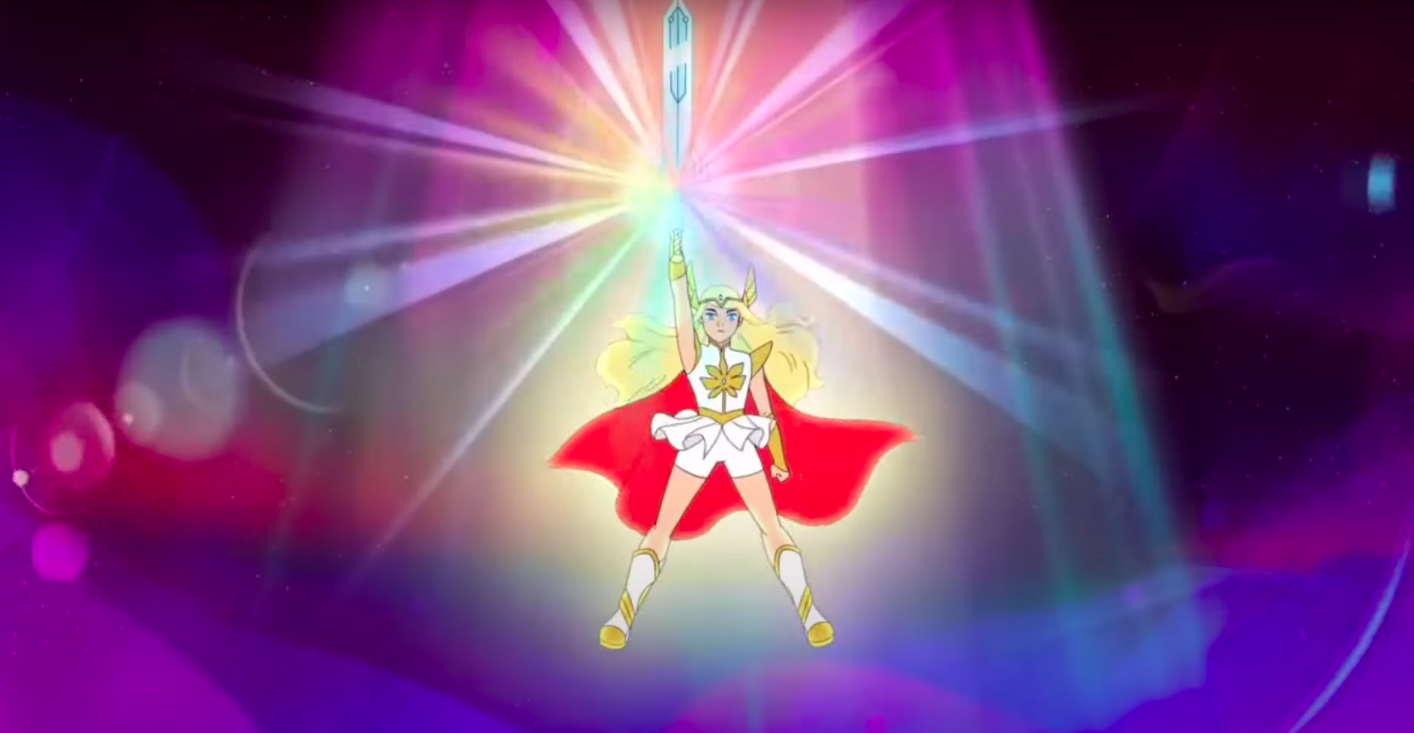
She-Ra and the Princesses of Power - A Retrospective

It has been seven years since the start of She-Ra and the Princesses of Power and just five since it concluded, but the show's legacy remains as vibrant and relevant as ever. When the series first aired on Netflix, it was met with both excitement and controversy. A reimagining of the classic 1980s cartoon, the show faced immediate scrutiny from fans of the original. Debates about the new animation style, character redesigns, and particularly the show’s increased LGBTQ+ and minority representation, dominated online discourse. Despite the initial ‘Go Woke, Go Broke’ criticisms, the series quickly proved its detractors wrong, becoming a critical and commercial success.

Looking back, the show's strength was its masterful storytelling and profound character development. Showrunner N. D. Stevenson, known for their work on Lumberjanes and Nimona, brought a depth and humanity to the world of Etheria that was truly captivating. What made the series so compelling was its nuanced approach to morality; there were no simple heroes or villains. Characters like Hordak, who sought acceptance, and Scorpia, who struggled in a toxic relationship with Catra, were given complex motivations that made them feel real and relatable. This humanistic approach allowed for an exploration of themes like trauma, identity and the search for belonging without resorting to easy answers.

At the heart of it all was the tumultuous relationship between Adora and Catra. Their journey from inseparable best friends to sworn enemies and eventually to partners was the emotional core of the show. Adora's arc was one of self-discovery, growth and finding her place in the world as She-Ra. In contrast, Catra’s story was a poignant exploration of attachment issues and the devastating effects of abuse and neglect from figures like Shadow Weaver. Their dynamic was a masterclass in character writing, with every victory and setback feeling earned and deeply impactful. The show dared to explore the destructive nature of their bond while also holding out the hope for healing and reconciliation, a powerful narrative that resonated deeply with many viewers including me, a British Asian man in his mid-40s.

The show's animation, often described as being in the ‘CalArts style’, with its distinctive jellybean mouth similar to Steven Universe or The Amazing World of Gumball, was initially a point of contention for some. However, this stylized, expressive approach served the story perfectly, allowing for a wide range of emotional expression and dynamic action sequences. The show proved that detailed, ‘realistic’ animation wasn't necessary for powerful storytelling, following in the footsteps of many beloved modern cartoons.

Ultimately, She-Ra and the Princesses of Power is remembered not just as a great cartoon, but as a pop culture landmark for its fans. It pushed boundaries by featuring a diverse cast and normalized LGBTQ+ representation in a mainstream animated series but was also backed by engaging stories and well-rounded characters; the show was a testament to the power of authentic representation and thoughtful storytelling. It remains a shining example of what modern animation can achieve when it embraces inclusivity and complex, heartfelt narratives. It is a show that remains close to my heart.

LINK: Japan: My Journey to the East

LINK- Ulysses 31 Retro Soundtrack Review

LINK- An English Geek in Saudi Arabia

LINK- Gravity Falls Complete Series Review

LINK- Scooby Doo: Mystery Incorporated Complete Series 1 Review

LINK- Nintendo: My One Constant in My Gaming Life

No God but God: The Origins, Evolution and Future of Islam by Reza Aslan - Book Review (and Some Thoughts)

Religion, it must be understood, is not faith. Religion is the story of faith. It is an institutionalized system of symbols and metaphors (read rituals and myths) that provides a common language with which a community of faith can share with each other their numinous encounter with the Divine Presence. Religion is concerned not with genuine history, but with sacred history, which does not course through time like a river. Rather, sacred history is like a hallowed tree whose roots dig deep into primordial time and whose branches weave in and out of genuine history with little concern for the boundaries of space and time. Indeed, it is precisely at those moments when sacred and genuine history collide that religions are born.

Wow! So, with this Reza Aslan looks into the origins of Islam. He does so with respect, understanding and a belief that religion is shaped by the socio-politics of the time; how could it not be after all?

1: The Sanctuary in the Desert - Pre-Islamic Arabia

Aslan looks at the Zamzam spring and posits that the Ka'ba could have been placed next to it as a spring in the middle of a desert is a wondrous thing for the bedouins. For Arabs it was considered the axis mundi, the naval of the world, but there have been many of these around the world including the pyramids of Egypt and the Easter Island Moai figures. The multiple different religions and gods of the Arabian peninsula were celebrated here and this was know as the Jahiliyyah or 'The Time of Ignorance'.

However, Aslan argues that this simplifies the beliefs of the time with a paganism brush, something that is not uniform but rather quite fluid for different people including fetishism, totemism to manism (ancestor cults)- there was not a uniform single belief.

Allah was originally an ancient rain/sky deity, similar to Zeus, who was the most supreme being to pre-Islamic Arabs. Like the Greek pantheon, there were lesser gods including his three daughters, Allat (‘the goddess’), al-Uzza (‘the mighty’), and Manat (‘the goddess of fate’). The Kahins were soothsayers, made up of men and women across different socio-economic groups, who acted as intermediaries and could speak to jinns and spirits... for a fee, of course. Their readings were cryptic and it was up to people to interpret the meaning.

In the Ka'ba, although Allah was considered the King of the Gods, he was not represented by any figures but there was a Syrian deity called Hubal, who took pride of place. This belief in Henotheism, the belief in a single High God without rejecting the existence of other subordinate gods, meant that Judaism and Christianity were represented in the Ka'ba. Adam, Noah, Abraham, Moses and Aaron were important to all three of these Abrahamic faiths and there was an intermingling of ideas and concepts, especially since the Babylonian Exile a thousand years earlier, Rome’s sacking of the Temple in Jerusalem and the various waves of migration. However, when the first Council at Nicaea in 325 C.E. declared Jesus to be ‘fully God’ and the Council at Chalcedon in 451 C.E. entrenched the doctrine of the Trinity into Christian theology there was an alteration of Henotheism.

The similarities in ideas and concepts between the Bible and the Pagan Muslims were seen as symbols and signs that were familiar and so the accretion of lore built up but a lot of the key concepts and ideas built upon the religion of Zaroastrianism. Zarathustra preached the existence of a heaven and a hell, the idea of a bodily resurrection, the promise of a universal savior who would one day be miraculously born to a young maiden, and the expectation of a final cosmic battle that would take place at the end of time between the angelic forces of good and the demonic forces of evil. So far, so Biblical but these concepts predated Christianity by over a thousand years and Judaism by several hundred.

A look back at the 'pure, unadulterated version' of Abraham's teachings grew with Hanifism, a pre-cursor to Islam. There are even several accounts of a Hanifi named Zayd proselytising to a young Muhammed (PBUH) about monotheism and the Abrahamic god. Aslan makes a point that this is not blasphemous or contrary to Islamic teaching as, 'All religions are inextricably bound to the social, spiritual, and cultural milieux from which they arose and in which they developed. It is not prophets who create religions. Prophets are, above all, reformers who redefine and reinterpret the existing beliefs and practices of their communities, providing fresh sets of symbols and metaphors with which succeeding generations can describe the nature of reality.'

Muhammed (PBUH) always said he was a man chosen by God to spread the message but never claimed any divinity, just a message to spread the truth about Allah. Aslan then provides us with a brief overview of Muhammed's (PBUH) life.


2: The Keeper of the Keys - Muhammed in Mecca

We next get a look at the power structures within Mecca and how guardianship of the Ka'ba, a pilgrimage site for many in the Arabian peninsula, was linked to trade and wealth. It was an important religio-economic zone but was by no means more noteworthy than other cities which were more central to the trading routes. However, the one advantage it did have was that it had a universal sanctuary of the Ka'ba where all gods of the area were represented, something that was significant as the site was worth going out of the way for for many pilgrims, bringing wealth and prosperity for the Quraysh.

Muhammed (PBUH) received the revelation and was told to recite by Allah but he was not yet establishing a new religion, rather he was calling for sweeping social reform. 'He was not yet preaching monotheism; he was demanding economic justice,' states Aslan.

It was only when his religion started to affect the Quraysh bottom line and socio-religious structure that Muhammed (PBUH) became seen as a threat. This came in the form of the Shahadah in 613 CE and the proclamation that there is only one god - polytheism, henotheism, monotheism, Christianity, Judaism, Zoroastrianism, Hanifism, paganism in all its varieties were common and familiar but the financial implications of Muhammed’s (PBUH)) message was problematic for them. Adding on the claim to be the new prophet with links to Abraham and all those before him and Muhammed (PBUH) had gained the authority and power rather than been granted it by the Quraysh. We then have the recounting of the death of his uncle and wife and the decision to leave Mecca and spread the message elsewhere.


3: The City of the Prophet - The First Muslims

The chapter covers the Hijra, the secret exodus of the companions leaving Mecca and following Mohammed (PBUH) to Yathrib, a small community. The community grew and Medina came to represent the model of Islamic perfection - it has been embraced by a diverse group and so has become all things to all people but there are obvious disparities in thought.

What was created was radically new kind of social organization with a neo-tribe not linked by genealogy but a faith in the Shahadah, which led to a new religion with social and economic reform. The egalitarian principles rankled some who were hierarchically minded as many thought they were more privileged than others and his declaration on a ban on usury, equality of men and women, zakat and rules of law were highly controversial for the time.

After the prophet passed, the chain of transmission became more convoluted with each passing generation and some of the 70, 000 hadiths said to have come from Muhammed (PBUH). However, according to Aslan many have come from the Torah, Bible, Persian maxims, Indian sayings and even chunks of the Lord's Prayer but all were attributed to the prophet for the material gain of those who claimed their prophetic provenance. This means we have to wade through truthful and manufactured teachings accredited to the prophet, a bit of a problem when it is claimed to be the One True God's will.


4: Fight in the Way of God - The Meaning of Jihad

There is a deep-rooted stereotype of Islam as a warrior religion but a lot of this has its origins in the papal propaganda of the Crusades. Back then, that was the means of territorial expansion but when European colonialists systematically plundered the natural resources of much of the known world somehow their religiously sanctioned violence was spoken of in civilising tones; this is blatant racism. 

The term of ‘jihad’ was defined after Muhammed’s (PBUH) death but had been manipulated so the greater and lesser jihad concepts were amalgamated by some to mean 'religious war' but it means an internal, existential struggle to be better. 

Over the past century or so, Jihadism has undergone a radical reinterpretation from the original concept of jihad. Aslan states, 'What has for centuries been defined as a collective duty that can be waged solely in defense of life, faith, and property has, in Jihadism, been transformed into a radically individualistic obligation, totally divorced from any institutional power.' 

So what we have now is violence committed in the name of Islam without the principles and rules of Islam which categorically state, “Permission to fight is given only to those who have been oppressed … who have been driven from their homes for saying, ‘God is our Lord’” (22:39).

Jihad has turned from a defensive position to an offensive one in the recent past but it wasn't always this way. 

Aslan looks at the way the Medina Jews and Muslims interacted and argues that they were both within, ‘The same sphere of religious discourse,' in that both shared the “same religious characters, stories, and anecdotes, both discussed the same fundamental questions from similar perspectives, and both had nearly identical moral and ethical values." Most disagreements were due to interpretation rather than opposing world views. 

Muhammed (PBUH) stated that the concept of the Umm al-Kitab (Mother of Books) meant that the Jews, Christians, and Muslims shared a single divine scripture so constituted a single divine Ummah. The Quran states, “Do not argue with the People of the Book—apart from those individuals who act unjustly toward you—unless it is in a fair way” (29:46).

When the Jewish Banu Qurayza were executed it was not due to religious animosity but rather due to their betrayal as they sought to undermine the defence of the Ummah- an agreed punishable sentence that all adhered to. This was not, as some have declared religious persecution as Aslan states, “every Ummah have its own Messenger” (10:47). Thus, to the Jews, God sent the Torah, “which contains guidance and light”; to the Christians, God sent Jesus, who “confirms the Torah”; and finally, to the Arabs, God sent the Quran, which “confirms the earlier revelations.” In this way, the ideological differences among the Peoples of the Book is explained by the Quran as indicating God’s desire to give each people its own “law and path and way of life” (5:42–48).

After his death, many Muslim scriptural and legal scholars of the following centuries changed and manipulated the rules to make it fit in linen with the current situation. 

Aslan ends the chapter with Muhammed (PBUH) entering Mecca, clearing out the Ka'ba of the idols and establishing Islam in his place of birth. 


5: The Rightly Guided Ones - The Successors to Muhammed

This chapter looks at the death of Muhammed (PBUH) and the power struggle that followed to fill the vacuum left. The Ulama, the 'learned ones' would create the guidance and code of conduct for the believers' life. Aslan discusses the rift creates with Ali and Bakr vying for position of Caliph of the Ummah. Abu Bakr gained the position and his immediate successors—the first four Caliphs - ushered in a golden age and are collectively referred to as the Rashidun, the “Rightly Guided Ones”

We then get a quick timeline of the centuries afterwards and the nationalism vs universal ummah debate which still persists. Aslan states, "... without either a centralized political authority (like a Caliph) or a centralized religious authority (like a Pope), the only institutions in the modern world that have had any measure of success in uniting the Muslim community under a single banner have been the religious institutions of the Ulama." The Ulama were the keepers of the knowledge of Islam. 


6: This Religion is a Science - The Development of Islamic Theology and Law

This chapter looks at the turmoil that such theological questions such as what are the attributes of God, what is free will and what is the nature of the Quran? Is it a created thing which is separate from God’s essence or uncreated meaning the Quran and God are one? What follows is a theological tussle and an inquisition of sorts during the time of Caliph al-Ma’mun.

Aslan states that, "Religions become institutions when the myths and rituals that once shaped their sacred histories are transformed into authoritative models of orthodoxy (the correct interpretation of myths) and orthopraxy (the correct interpretation of rituals), though one is often emphasized over the other." In this way, the 5 pillars were a way to show that you were part of a global community of Muslims.

The chapter also looks at Tawhid and Shirk, in other words what is permissible and what is not. The idea of the unity and oneness of God is considered and the theological conundrums this brings: If God is one are his words one? Did God create good and evil in his oneness? This brings up the Traditionalist vs Rationalist debate.

Aslan also talks about Shariah Law and states, "The Islamic law has not come into being the way conventional law has. It has not had to undergo the same process of evaluation as all the man-made laws have done. The case of the Islamic law is not that it began with a few rules that gradually multiplied or with rudimentary concepts refined by cultural process with the passage of time; nor did this law originate and grow along with the Islamic community with rudimentary concepts refined by cultural process with the passage of time.”

This process, he posits, was shaped not only by local cultural practices but also significantly by Talmudic and Roman law. He says that it is important to understand that, except with the Quran, every other source of Islamic law emerged from human, rather than divine, endeavor. Thus, Aslan argues that there is 'absolutely nothing divine about the Shariah and in no way can it possibly be considered fixed and infallible.' 

When we allow faith to dictate history we betray both as we are manipulating both - facts matter and so to say that 'It's God's will' when it was actually based on societal norms and machinations from the time is something we need to consider. 


7: In the Footsteps of Martyrs - From Shi'ism to Khomeinism

This chapter looks at the split between the Sunni and Shia sects of Islam as the death of Ali and the rise of the Shia is examined. Aslan postulates that "The Prophet transmits the message while the Imam translates it for Humans." It is this difference in the transmission of the message that is central in the ongoing battle between the sects, especially since the belief is that Allah is eternal and infinite, so the Quran is understood as God's eternal word, revealed and manifested in time. 

It's all very wobbly wobbly timey wimey stuff but wars have been fought and many people killed over centuries for these specific points and pedantry. The discussion of the Mahdi (Appointed One), the Seven Imams and Hidden Imams further muddies the waters as lots of accretions pile on to make this seemingly simple religion with a core message much more complex - who'd have guessed that would have happened with more lore being added over time? 


8: Stain Your Prayer Rug With Wine - The Sufi Way

This chapter looks at the evolution of Sufism which was a mix of numerous philosophical and religious thoughts and theories including Christian monasticism, Hindu asceticism, Buddhist and Tantric thought, Islamic Gnosticism and Neoplatonism, and some elements of Shi‘ism, Manichaeism, and Central Asian shamanism - quite a heady brew!

Aslan argues that their asceticism and detachment was similar to the Mendicant Monks who travelled the land, spreading the Word whilst picking up various accretions that went into and changed their practices over time.

Even though some Sunni and Shi'ite Muslims treat the Sufis with suspicion, the Sufism themselves believe that reason and theology, creed and ritual, law and its commandments must work together to attain that supreme virtue: love. They believe that only by transcending the dogma and rules can one attain a closer relationship and intimate understanding of God.

I was born and remain a Sunni Muslim but this way of thinking is beautiful as it moves away from the rigid rules of Shariah (itself something that was created and altered by those in power to control the Ummah over time) and makes the religion a living thing that is personal and communal at the same time. This speaks to me as a someone who is a Muslim yet also deeply Humanist ... Yup, quite a heady brew indeed.

I like the idea that it doesn't matter how you reach the summit of your faith so long as you walk a path, any path, which all lead to the zenith is wonderful: 'that moment of enlightenment in which the veil of reality is stripped away, the ego obliterated, and the self utterly consumed by God.' In other words, he becomes one with the Universal Spirit and achieves unity with the Divine. In Evangelion terms, Instrumentaility but scientifically, the Singularity.

Aslan states,' For Sufis, there is no good and evil, no light and dark; there is only God. This concept of radical unity is called monism: the notion that all things, despite their variety, can be reduced to a single unified “thing” in either space, time, essence, or quality.'


9: An Awakening in the East - The Response to Colonialism

The Sepoy Mutiny, or rather the Indian Revolt of 1857 was a consequence of years oppression by the East India Company and the British colonial project which had stripped them of their land of its natural resources and tried to convert them and their families forcibly to Christianity. The lie that the West brought democracy, technology and the ideals of the Enlightenment were all cover for political and economic dominance, which was achieved through brutal military might. What the Western governments who took over new lands didn't always realise was that ideals such as social egalitarianism, popular sovereignty, and the pursuit and preservation of knowledge had their origins not in Christian Europe, but in the Ummah of Islam. Whether it was fairly implemented was a different case of course but the principles were there. However, the Ulama also arguably bore some responsibility for the decline of Islamic civilization as it stifled independent thought and scientific progress whilst Europe was ascending through the Renaissance and Enlightenment.

Aslan then looks at the concept of Pan-Islamism, "the encouragement of Muslim unity across cultural, sectarian, and national boundaries, under the banner of a single, centralized (and obviously Turkish) Caliphate—in other words, the revival of the Ummah." This was difficult to uniformly achieve so a Pan-Arabism concept took hold, where Arab unity would be the ties that bound, but the First World War redrew the map and this unity was never realised. This led to the creation of the Muslim Brotherhood, an all-encompassing religious, political, social, economic, and cultural system which its creator, Hasan al-Banna, thought "… represented a universal ideology superior to all other systems of social organization the world had known."

After al-Banna's assassination, the concept of Islamism, a nationalist ideology that calls for the creation of an Islamic state in which the sociopolitical order would be founded upon a distinctly Islamic moral framework, started burgeoning.

The Anglo-Saudi Treaty of 1915 was realised nearly 40 years later as the British encouraged the Saudis to recapture the Arabian Peninsula from Ottoman power to allow control over the Persian peninsula. The rise of Saudi Arabia and Wahhabism led to fundamentalists. This extreme of Islam were the Mujahadin who were put to use in Afghanistan to occupy the Soviet forces but, surprisingly, they won and this gave birth to Jihadism, a transnational militant movement that sought the creation of an Ummah without national borders or boundaries. This was an ultra version of Pan-Islamism with military might, funded and backed by President Jimmy Carter and the Saud family, which grew out of its remit and would alter geopolitics around the world. Al-Queda would turn most of the world (including most Muslims) against Jihadism after 9/11 and also would make the Middle East suspicious of America, as it seemed like the Middle East was a colonisation experiment with wars fought against the hateful 'Clash of Civilisations' rhetoric.


10: Slouching Toward Media - The Quest for Islamic Democracy

This chapter is almost autobiographical as it looks at Aslan's childhood in Iran before his escape to America during the Iranian Revolution of 1979. He covers the fall of the Shah, the rise of Khomeini and the disastrous Western backed Iran-Iraq War that unified the Iranians around their nation and leader, even when they had misgivings about his policies.

Aslan then jumps back to the post-war period and looks at how Western divide and rule empire building strategies led to bloody repercussions later in French Algeria (Civil War), Belgian Rwanda (Genocide), British Palestine (Nakba and partition), British India (Partition and civil unrest) and British Iraq (Sectarian violence). This was all due to the decolonisation process, where after many years of political and social engineering with little regard for ethnic, religious and social norms, countries were asked to just get on with reuniting the disperate elements of their country.

This got me thinking about how the Western talk of democracy in the Middle East is seen by many as disingenuous and hypocritical as when elections in Lebanon, Egypt and Palestine did not go the way the United States had hoped, the democracy promotion agenda was shut down. Post Muslim Brotherhood and Morsi ascent in Egypt after the Arab Spring (he was Time magazines 'Man of the Year'), the American government did nothing to support this burgeoning democracy when there was a military coup. At the time, we heard talk about a multi-faceted response but really it was what it usually always is: self interest and acquiring whatever resources it can get for itself. America did nothing to support Morsi and allowed the military to take over, once again normalising relationships with the new dictatorship.

We see this time and time again throughout history but, with the victors rewriting the past, it is only recently that there has been a more critical reexamination of the facts, like Thatcher's relationship with General Pinochet etc and the CIA destabilising many South American democracies.

Aslan looks at the wave of protests across the Middle East and North Africa as many Muslim majority countries were making a statement of identity, not a statement of belief. They were Muslim but they wanted democracy as the tenets of Islam are compatible with democracy, unlike what many claim. He says, "When the Prophet Muhammad created the first Islamic polity in Medina fourteen hundred years ago, he deliberately set the foundations for a comprehensive way of life meant to satisfy the social, spiritual, and material needs of the people, while at the same time fulfilling the will of God.. religion has always been more than a matter of beliefs and practices. It is, above all, a perspective, a mode of being. Religion encompasses one’s culture, one’s politics, one’s very view of the world. This is particularly true of Islam, which, like all great religions, has been shaped not only by metaphysical concerns but also by the social, cultural, spiritual, and political milieu in which it finds itself."

Aslan argues that religious pluralism, the view that all religions are equally valid paths to salvation or ultimate truth and can coexist harmoniously, is key in Islam and has been subverted or manipulated by those in power. However, there are many countries where this idea has worked well like Malaysia, Turkey, Indonesia, Bangladesh, Senegal, etc. It's not perfect by any means but name a country where it is? 

The seperation of State and Religion was built into Islam when Muhammed (PBUH) stated that no Caliph should have control over the religious institutions but only civic duties. Now consider the situation in America where State and Church have most definitely mixed to create the weird situation where abortion rights, female bodily autonomy and gay rights have been rolled back due to a rise in Christian fundamentalism amongst the political elite.

Aslan argues that religion is key in many countries but shouldn't dictate laws according to scripture, however it may help to inform it as it can create a moral framework. He says that Islam evolves with the times but there is a battle between "... those who seek to reconcile their faith and traditions with the realities of the modern world and those who react against those realities by reverting—sometimes violently—to the 'fundamentals' of their faith." And he's not wrong here, there is a split happening between the mobilizing forces for the Islamic Reformation but change is happening from within, albeit extremely slowly. 


11: Welcome to the Islamic Reformation - The Future of Islam

The newer generation of Muslims mostly want democracy rather than autocracy but are reconciling that against the wave of new self-styled preachers, spiritual gurus, academics, activists, and amateur intellectuals. The Ulama and the reformationists are in battle with the institution and individuals fighting over religious authority which is difficult as, unlike in Judaism or Christianity which have had their own reformations, Islam has no and had no single religious authority. No one individual or group can claim to speak for the entire religion or the billion and a half strong Muslim community, which is why it is uniquely difficult to reform or guide. Add the fact that 80% of the worlds Muslims do not understand Arabic and had to rely on the approves translations, until recently, and what we have is Islam as a worldwide community built upon common beliefs but through a uniquely national lens - the socioeconomic of a country may effect how you interpret Islam. 

A quick side note : I had never thought about it like this but thinking through it, that's why ISIS and any group that try to create a unified message of a caliphate in the Middle East guided by a powerful individual has never taken hold. Muslims know that the Quran specifically states that the exact timing of the Day of Judgment is known only to God and humans cannot manipulate or hasten this event. However, in Judaism, the belief in the coming of the Messiah is a core tenet, closely linked to the concept of 'Greater Israel' and the restoration of the Jewish people and their ‘sovereignty’ over the land. The Messiah, a descendant of King David, is expected to usher in a period of peace, rebuild the Temple in Jerusalem, and gather the Jewish people from exile. This belief system is often intertwined with Zionism, a movement that emphasizes the religious significance of the Land of Israel and its return to Jewish sovereignty. Zionism, like a doomsday cult of old, is always angling for the conditions to fulfill the prophecy to bring about these conditions. However, by forever linking Judaism with the concept of Greater Israel, Jews are linked to an inherently problematic ethnostate where there is a hierarchy of race and religion and apartheid is allowed. This is a big problem and a huge issue for the Palestine - Israel conflict. How do we reconcile this nonsense in the modern world with Human Rights for all, the rule of law and the Geneva Convention? Apparently, with Western complicity (as well as military and financial support) and Middle Eastern silence is how. 

Back to Aslan, he discusses how the Internet has further democratised Islam, creating a liberal and intolerant version of the religion - both are as valid as each other as the religion is open to interpretation and has no central guide. However, the radicalisation of some Islamic thought, with an algorithm pushing more inciteful posts that create traffic, leads to a poor perception of the religion in many countries who do not understand that it is a religion of peace. 

Aslan ends with a downbeat, 'we'll see how it goes but Reformations are messy' but he's not wrong and to deny this would be disingenuous. The book was written in 2011 and since then we have had the consequences of the Arab Spring, revolutions and uprising and a rise in young Muslims calling for democracy and better rights for women and LGBTQ+. I wonder, if he were writing an updated version of this book, what would he add or say. 

LINK: Gods: A Human History of Religion by Reza Aslan- Book Review (and Some Thoughts)

LINK: The Good Place and Philosophy - Book Review

LINK- The Anxious Generation: Book Review (and Some Thoughts)

LINK- Utopia for Realists- Book Review

LINK- On And On And Colston ( Or, How We Kinda Sort of Learned to Talk About the Legacy of Colonialism and the British Empire)

LINK- ‘Natives: Race and Class in the Ruins of Empire’ LINK: Elden Ring- Videogames As Art

LINK- Toxic: Women, Fame and the Noughties- Book Review (and Some Thoughts)

LINK- The Future Starts Here: An Optimistic Guide to What Comes Next- Book Review

Tiffany's Griffon - Graphic Novel Review

I am a primary school teacher and, as a comic book fan, have found that comics and graphic novels are a fantastic way to engage reluctant readers. I ran an after school club recently for reluctant year 4 and 5 readers and found Tiffany’s Griffon by Magnolia Porter Siddell and Maddi Gonzalez a very popular read.

The story is about a young girl called Marnie who is a bit of a social outcast and is really into a fantasy series. When she is visited by a fairy from the book series she so loves and tasked with looking after a Griffon egg and rearing the creature she thinks her dreams are coming true. The problem is she gained the egg under false pretenses and is not the Chosen One. Rather, the popular girl at school Tiffany is the intended recipient but Marnie claimed she was Tiffany. And so, as the creature seems to build a bond towards Tiffany, Marnie grows jealous but there are real consequences as the magical kingdom is being destroyed by the evil witch. Can Marnie put aside her small woman syndrome and rightfully place the Griffon and Tiffany together? Well, there's the story!

The story deftly blends human drama with the more fantastical elements well and gently preaches the message of 'Never judge a book by its cover.' The story builds from a cozy Tamagochi 'look after an egg' to a genre-playing Scribblenauts/ Penny Crayon middle to a cracking finale with hints of The Neverending Story.

The false foundational relationship serves as the primary engine for the narrative, moving beyond mere wonder to delve into the practicalities and ethical considerations of Marnie harboring such a unique being. Author, Magnolia Porter Siddell, skillfully navigates the challenges Marnie faces in protecting her discovery while grappling with the implications of its existence on her own life and the wider world. Her character development is a notable strength as she realises that she is not the Chosen One and she has been judging Tiffany all wrong. Tiffany evolves from an individual thrust into an unforeseen circumstance to one who demonstrates remarkable resilience and resourcefulness. Her journey is not merely one of adventure but of significant personal growth, illustrating the weight of her unique guardianship and care for her poorly father and griffon.

Overall, Tiffany's Griffon is a well-crafted and engaging work that will resonate with any reader who appreciate fantasy infused with thoughtful character development and meaningful thematic exploration. It offers a refreshing perspective on the classic mythical encounter, grounding it in relatable human experience.

LINK: Japan: My Journey to the East

LINK- Battle Angel Alita: And So It Ends

LINK- The Moomins 80's Soundtrack Vinyl Review

LINK- Inspector Gadget Retro Soundtrack Review

LINK- Ulysses 31 Retro Soundtrack Review

LINK- The Mysterious Cities of Gold Retro Soundtrack Review

LINK- Sonic Mania Video Game Vinyl Soundtrack

LINK- Thomas Was Alone Video Game Vinyl Soundtrack Review

LINK- Akira Soundtrack Vinyl Review

Growing Up Internet - My Memories

My daughters are at an age where the internet is becoming a thing. Now, it's always been a thing as they are ‘Digital Natives’ rather than a ‘Digital Nomad’ like me, using it to watch their shows and get Alexa to carry out their whims, but they are having to use it for their studies now and so we've had to set out rules and boundaries. The fact is that the internet will continue to have an increasingly significant role in their lives has prompted me to reflect on my own experiences with its emergence. Unlike them, I grew up in an era when the internet was still finding its footing…

Gaming writer Leigh Alexander's Breathing Machine: A Memoir of Computers beautifully captured the experience of growing up alongside the nascent internet, a journey that resonated deeply with me as someone in my early forties. Her memoir evoked a powerful nostalgia for a time when technology felt both exhilarating and profoundly complex. The descriptions of connecting with people in chat rooms, receiving early emails and navigating forgotten search engines paint a familiar picture for those who witnessed the internet's inception. The distinct visual and auditory cues of that era—the blurry images on CRT monitors, the crackle of internal speakers and the mechanical sounds of floppy disks and hard drives—created an almost tangible atmosphere, as if a ‘ghost in the machine’ truly existed.

My own first introduction to the internet occurred around 1996, in Year 10, when a friend insisted I create a Hotmail account. Despite my initial lack of understanding, I created an account that I still use today and am not too embarrassed by. In those early days, the internet felt like a place of boundless magic, potential and authenticity and an unfettered, democratic space brimming with hope.

One of the most significant aspects of growing up with the internet was the ability to find communities. These online spaces were formative, allowing individuals to connect with like-minded people, whether actively participating in comments, chat sections and bulletin boards or simply observing. The shared passion for a particular topic transcended the level of engagement. There was a prevailing belief that the internet could eradicate ignorance by providing widespread access to information, ushering in an era of euphoria where empathy and understanding would flourish globally. Sadly, that optimistic theory seems to have faded, much like Lycos, Geocities, Ask Jeeves and AltaVista.

I recall an instance where I attended a weekend university taster program at the London School of Economics (LSE), which offered access to fast internet and printers. I spent hours of my Saturdays engrossed in downloading and printing greyscale images from Mysterious Cities of Gold, Evangelion and Battle Angel Alita, a few of my greatest passions at the time. The sheer volume of information available online was astonishing. I would stay well into the afternoon, thoroughly enjoying myself while listening to Jean Michel Jarre on my portable CD player. Yes, I was a very hipster teen with my finger on the pulse!

I found my old CD player man-bag whilst tidying up my stuff from the loft…good times!

Growing up with the internet also meant encountering unexpected content, which, in some ways, accelerated maturity. In the late 1990s, it was surprisingly easy to stumble upon inappropriate material accidentally. Even seemingly innocuous searches, like for images of ‘milk’ could lead to unexpected results. A tangential link could quickly expose you to the most grotesque or peculiar content. This experience brought to mind the slow, line-by-line loading of images on my old Amstrad CPC 464 as, back then, images would load row by row over several seconds. I became quite adept at quickly clicking back from an image before it became offensive, almost like a digital game of whack-a-mole.

My involvement in the Gold List, a Mysterious Cities of Gold mailing list, was how I first acquired copied VHS tapes of the entire series. I was ecstatic, paying £50 at the time for six NTSC VHS tapes from America. Later, when a friend downloaded the unofficial soundtrack for me via BearShare, I was convinced of the internet's magical nature. This led me down a nostalgic rabbit hole, where I downloaded old series I had long wanted to watch but were unavailable for purchase—a time well before the widespread release of goldrush content on DVD.

During my university years, the internet also exposed me to a different kind of content: conspiracy theories. I delved into Erich von Däniken's theories about aliens creating the pyramids, which led me to Graham Hancock's pseudoscientific ideas about ancient civilizations being more advanced due to alien intervention or Atlantean knowledge. This, in turn, introduced me to David Icke's theories about a cabal of globalists and bankers ruling the world, secret societies like the Illuminati controlling people, and inter-dimensional shapeshifting aliens feeding on blood and preparing Earth for harvesting. I won't deny that I felt as though I had stepped ‘through the looking glass,’ and it genuinely scared me; I began seeing covert agents and spies everywhere. However, a friend from UEL chatted to me, told me to give my head a wobble, whilst another introduced me to the music of Björk and then I had an epiphany: Really? Bloomin’ lizards! Yes, while there is no doubt that powerful individuals and groups (lobbyists) undoubtedly exist(ed), succumbing to fear and paranoia was not the answer, especially with regards to blood-drinking, shape-shifting, inter-dimensional space lizards (for those who don’t know, this is an actual Icke theory). No, we had Y2K and the Mayan year of 2012 to worry about.

Now I know that living life and challenging real oppressors, rather than fictional reptilian creatures or fleeting cult of personality groups, is what truly matters. That and cat videos. Lots and lots of cat videos!

Despite being virtual spaces, the internet facilitates genuine human connections and relationships. These online communities have served as crucial support networks for many, particularly during events like the pandemic and I am confident they will continue to do so in the face of whatever the future holds for us.

LINK- Japan: My Journey to the East

LINK: My One True Gaming Constant in My Life- Nintendo

LINK: The Offworld Collection- Book Review

LINK- The Future Starts Here: An Optimistic Guide to What Comes Next- Book Review

LINK- On And On And Colston ( Or, How We Kinda Sort of Learned to Talk About the Legacy of Colonialism and the British Empire)

LINK- An English Geek in Saudi

Project Nought - Graphic Novel Review

I was hooked from the moment I saw the cover of Chelsey Furedi's graphic novel Project Nought in the local library. The blurb promised a story set in New Zealand, a refreshing change of pace from the usual sci-fi settings, and its premise felt instantly compelling. So, was it worth taking it out on loan?

The story is about Ren, a subject who is a teen living in 1996, who runs away from home and is knocked unconscious because reasons. When he wakes up he realises he is in the year 2122 and is in a time traveller exchange programme, which sounds amazing, but after his 5 months his memories will have been wiped, which sounds less awesome. Ren panics initially but leans into future living until he meets his future self in an accident. Cue corporate intrigue, espionage and rebels and you end up with a YA sci-fi thriller that discusses big issues like gender orientation, LGBTQ+ rights, climate change and corporate overreach. It's a sophisticated story disguised as a fun sci-fi adventure, making it feel like a 'Baby's First' Matrix, or a spiritual lovechild to classics like Twelve Monkeys and Moon.

Furedi's skill as both an artist and a storyteller is clear throughout the book as the art is dynamic and expressive, perfectly complementing the complex narrative. The pacing is masterful, building genuine tension and excitement as the time-traveling plot twists and turns, y’know, all ‘wobbly wobbly timey wimey’ stuff. It all leads to a dramatic and satisfying climax that pulls all the narrative threads together in a structurally cohesive and engaging way.

Ultimately, Project Nought is a high-concept graphic novel that's both a joy to read and genuinely thought-provoking. I had an absolute blast with this one and would highly recommend it to anyone looking for a smart, visually stunning sci-fi thriller.

LINK- Pure Invention: How Japan's Pop Culture Conquered the World- Book Review (and Personal Reflections)

LINK- The Rise of Retro Gaming During Covid

LINK: Japan: My Journey to the East

LINK- Blood, Sweat and Pixels- Book Review

LINK- Utopia for Realists- Book Review

LINK- On And On And Colston ( Or, How We Kinda Sort of Learned to Talk About the Legacy of Colonialism and the British Empire)

LINK- ‘Natives: Race and Class in the Ruins of Empire’ LINK: Elden Ring- Videogames As Art

The Indie Sleaze Era and Its Reappraisal

The Kate Nash podcast, The Rise and Fall of Indie Sleaze, has been a great listen as she deep-dives into the tribal music scene that dominated Britain in the early to mid-2000s. It was a time defined by bands like Franz Ferdinand, Razorlight and The Libertines, all mixed with the fashion of skinny jeans, questionable hygiene, pigeon-toed poses and alcopops.

For me, that period is inextricably linked with video games such as Burnout, Tony Hawk's Pro Skater and SSX Tricky, as well as the rise of rhythm games like Rock Band and Guitar Hero. These games weren't just entertainment but they served as a crucial discovery engine for new music. Many of the game soundtracks at the time were curated with a specific, high-energy vibe and introduced millions of players to bands they might never have heard on mainstream radio. A song featured in Burnout or a Tony Hawk game could become an overnight anthem, catapulting an indie band into the global consciousness. This made videogames a significant tastemaker and a powerful platform for a band to make its name. While the era gave us some truly great bands, it was also full of landfill indie acts - knockoff acts that jumped on the bandwagon without the talent or charisma to back it up but with the backing of moneymen who were jumping on to the gravy train. So, for every The Killers we had The Long Blondes .

The era's defining platforms were the nascent internet and MySpace and it's been fascinating to see a new generation reappraising much of the music from the early 00s. While today's music landscape is more democratized, it's also arguably more gate kept due to the prohibitive cost of gigs and the closure of many smaller venues. However, the availability of streaming of concerts and festivals means indie bands sleaze bands are having a revival with huge coverage and crowds at Glastonbury and large venues like the O2 Arena in London.

Looking back, there's a strong sense of nostalgia, but it's important to be clear-eyed about the past. I recall the febrile celebrity coverage in mainstream newspapers, where unremarkable daily activities were often trumpeted as monumental news. While we shouldn't impose today's norms on that time, revisiting the movies, music, and magazines of the era reveals a pervasive mood of casual misogyny, toxic lad culture and unjust cruelty, something looked at in detail in Toxic: Women, Fame and the Noughties by Sarah Ditum. It's an embarrassing legacy and, while I hope we've changed, I'm not convinced we've come as far as we'd like to think.

That aside, the podcast is well worth a listen and so are some of the key albums from the time.

Nostalgia for Finite Series

The summer holidays of childhood were once defined by a unique television experience. For a glorious few weeks, BBC 1 and ITV would dedicate their morning blocks to children's programming. These weren't the endless, on-demand streams of today but a finite, curated collection of shows with each episode a precious, fleeting moment.

It’s easy to look back with rose-tinted glasses and imagine a world of never-ending adventures. The reality, however, was often much more modest. Many of these series, particularly the imported cartoons, comprised a mere 13, 26 or 39 episodes. Their brevity, far from being a limitation, was their strength as it created a sense of urgency, a shared understanding that this particular story arc had a beginning, a middle and an end and there was just one chance to watch it (until repeats would be shown gosh knew when). This was before TV guides were the norm, unless you paid for the Radio Times and we weren’t millionaires in our household.

This shared experience forged a common cultural currency and you and your friends would discuss the latest escapades of characters like Dogtanian, Sebastian or the ongoing saga of T-Bag, who seemed to be a familiar face yet was reinvented just enough each year to keep things fresh. The discussions weren't just about the plot; they were about the shared anticipation, the collective gasp at a cliffhanger and the joy of knowing that millions of other fellow children were watching the same thing at the exact same time.

T-Bag and the Pearls of Wisdom is a bit of a classic

Of course, not everything was golden as the memory of those term-time Sundays remains indelibly linked to the dreary feeling of shows like Songs of Praise and Antiques Roadshow, a sad reminder that the weekend was drawing to a close and the busy school-week would start anew.

Today, the world of television is a different beast. Services like Netflix, Disney+, and Amazon Prime offer a seemingly infinite library of content, all available at the touch of a button on pretty much any screen.

While the quality of shows has, arguably, never been better, something has been lost; the shared zeitgeist, the common language and parlance of a generation all tuning in together, has been replaced by individual atomised viewing habits.

Watching classic shows like The Mysterious Cities of Gold and Dogtanian with my own children, I'm struck by the power of these finite series. They offer a self-contained world that can be revisited and enjoyed, a perfect blend of nostalgia for me and new discovery for them. It’s a chance to share a piece of my childhood, a time when a limited number of episodes held limitless possibilities. Now, I’d better get to sleep as I have school tomorrow… the problem is, now I’m the teacher!

Please Save My Earth- Cult Manga Series Review

Please Save My Earth is a series I only knew of through a soundtrack which I purchased from Forbidden Planet in London over 30 years ago. It was on sale and was an impulse buy as at the time manga and anime CDs were very expensive so a CD for under £10 was a bargain. I had never seen the series before but recently found all the English dubbed episodes online so thought I'd dive in. Was it good though?

Well, one thing that comes through clearly is how weird a series it is, one with timeslips, past lives, reincarnation, alternate timelines and the eternal love triangle. But I’m getting ahead of myself…

The story concerns Alice, a typical high school student in Japan who dreams that she is the reincarnation of an alien scientist who lived on the Moon. She find other youths who have a similar dream and the group decide to find others in order to understand what it all means. However, they soon discover that their present and alternate lives clash and combine in interesting ways as past loves, hates, jealousies and worried bleed into the present.

The series, produced by Studio I.G. and based on the shojo manga by Saki Iwatari, was apparently quite influential back in the day and I can kind of see why. During our formative years we go through change and growth and the show isn't scared to look deep into our humanity to see what makes us all individual and unique.

As with many OAVs of the time, the art is stunning and has aged very well. The music is haunting and melancholic to create the perfect mood. As for the story, it reminds me of The OA in some ways with fate, destiny, The Garden of Forking Paths and the eternal battle between good vs evil playing out through time, or Sense 8 which is all to do with the interconnected lives of individuals across the world who share a mysterious connection. Mostly, I think it shares ideas that were explored further in David Mitchell's sublime Cloud Atlas- the grand story of people whose  destinies are entwined across time and space in the most profound way, sometimes for good and sometimes for ill.

At 6 episodes of 30 mins in length, it's not the most time consuming series to dedicate some time too but it does linger in the mind. Considering that only in the last few years have more mainstream shows depicted the ideas presented here this series was a bit of an outlier. Not bad for a lesser known series (at least in the West) which was created in 1993.

LINK: Japan: My Journey to the East

LINK- Battle Angel Alita: And So It Ends

LINK- The Moomins 80's Soundtrack Vinyl Review

LINK- Inspector Gadget Retro Soundtrack Review

LINK- Ulysses 31 Retro Soundtrack Review

LINK- The Mysterious Cities of Gold Retro Soundtrack Review

LINK- Sonic Mania Video Game Vinyl Soundtrack

LINK- Thomas Was Alone Video Game Vinyl Soundtrack Review

LINK- Akira Soundtrack Vinyl Review

The Ghosts of Yesterday and the New Sparks of Tomorrow

The realisation that my next big milestone is 50 has had a funny effect on rearranging my mental furniture. Those picture-perfect moments I chased in my twenties, the ones that I thought would be etched in my memory forever have softened and blurred, like watercolors left in the rain.

Now it's the little weird mishaps, the glorious imperfections – the long bus ride on the number 5 after missing the last train from Central London, sitting in a cold tent in a campsite in Snowdonia sharing out a Kitkat Chunky between 4 of you because you forgot the shops would close for a Bank Holiday, walking around London in the early hours with a dear friend after forgetting where we parked the car after a long walk to combat our shared insomnia – those are the memories that have truly stuck with me. They have a bit of grit, a little friction, something to hold onto.

And isn't that true of so much in life? We build these shrines to the things we loved, the touchstones of our youth. That movie that wasn't just a movie, but a pure shot of wonder (The Goonies) or that cartoon that sparked our imagination (The Mysterious Cities of Gold). So when new versions arrive, shiny and different, our first instinct can be a protective groan of ‘It's not the same!’ forgetting that we aren't either.

The internet can fan the flames of this resistance as fandoms can turn fierce when beloved stories are reimagined for a new generation. We see it all the time but I saw it with the reimagined and updated He-Man, She-Ra and Carmen Sandiego – the list goes on. There's a powerful pull to our nostalgia, a comforting familiarity in the echoes of the past but nostalgia, like any strong emotion, can be manipulated. Those Facebook groups painting the past in hues of pure gold often gloss over the less-than-perfect realities. It’s easy to fall into the trap of 'hauntology,' a longing for a past that never quite existed, a phantom limb of what could have been.

Once I’d got over the difference in voice actors, animation and some characterisation, the MCOG finale proved to be every bit as amazing as I’d hoped and more.

I'm not perfect and am not immune to this either, I have to admit. When the second season of The Mysterious Cities of Gold released some 30 years after the original, my initial reaction was…well, muted. It felt different. Wrong even. How could they have ruined such a cherished show from my childhood? But then, I took a breath. I gave my head a wobble and I realized the issue wasn't the show; it was me. It was a good continuation, even great, but it wasn't the carbon copy I'd built up in my mind over years of rewatches, reading fan theories and wishful thinking.

Once I shifted my perspective, once I truly recontextualized the situation – a continuation of a beloved story, guided by some of its original creators after all this time – it felt like a gift. No more fan-fics confined to message boards; this was the real deal unfolding. And you know what? The show blossomed beautifully over the following two seasons, ending in the prefect way that felt worthwhile after 40 years.

Growing older isn't about accumulating absolute wisdom as the world keeps turning and new perspectives emerge. Just because we've clocked more years doesn't automatically grant us superior insight – the current global political landscape certainly proves that point. It's easy to fall into that Simpsons meme:

No-one wants to think that they are out of touch, but it does sneak up on you.

But this isn't some self-indulgent rant about how things were ‘better back then.’

It's about something bigger. It's about recognizing that the joy we found in something as children or young adults was often tied to that particular moment in our lives, our specific experiences, the people we shared it with. To expect a new iteration to perfectly replicate that feeling is often setting it up for failure.

Instead, what if we approached new ideas, and perspectives with open hearts and minds? What if we allowed them to spark that same sense of wonder in a new generation? Their connection to it will be different, colored by their own experiences, their own world and that's okay. It doesn't diminish what the original meant to us but simply means that wonder can bloom in different gardens.

Learn from your experiences, absolutely, but don't let nostalgia become a weapon with which to bludgeon and dismiss the passions of the young. Let's appreciate the echoes of the past while embracing the vibrant possibilities of the present. Let's allow new flames to flicker and grow, even if they cast a slightly different light. After all, the magic lies in the spark, not just the memory of the original fire.

LINK- Mysterious Cities of Gold Season 3 (English Dub) -Complete Series Review

LINK- MCOG Series 2 Review

LINK: Japan: My Journey to the East

LINK- Ulysses 31 Retro Soundtrack Review

LINK- MCOG Soundtrack on Vinyl Review

LINK- Twin Peaks: The Return Series Review

LINK- Secret History of Twin Peaks: Book Review

LINK- Twin Peaks: The Final Dossier Book Review

LINK- An English Geek in Saudi Arabia

The Straight Story - Cult Film Review (and Some Thoughts on Entropy and Mortality)

The death of David Lynch affected me deeply. I have been a huge fan of his work and I found his Art Life philosophy quite singular and unique. There are some scenes from his ouvré that will remain indelibly linked with my personal history, especially the formative Twin Peaks.

However, Lynch's The Straight Story stands out as a unique entry in his filmography, diverging sharply from the surreal and often disturbing imagery that defines much of his work. This quiet, almost meditative road movie chronicles the remarkable journey of Alvin Straight, an elderly man who, propelled by a desire to reconcile with his estranged brother, undertakes a 240-mile trek on a riding lawnmower.

Beneath its seemingly simple premise, the film delves into profound themes, most notably that of mortality. Alvin, contending with a heart condition and the physical limitations of old age, directly confronts his own impending death. His arduous journey becomes a powerful metaphor for life's ultimate passage, a slow and deliberate progression toward an unknown destination.

Lynch, with an uncharacteristic gentleness, beautifully captures the expansive American Midwest. He highlights the sheer vastness of the landscape, underscoring the delicate insignificance of human existence within its grand scale. The film's pervasive peace, punctuated by the rhythmic chugging of the lawnmower, creates an atmosphere conducive to deep contemplation and introspection.

The Straight Story serves as a poignant reminder of the vital importance of human connection and the enduring strength of love and forgiveness, even when faced with the inevitability of death. It is a film that resonates long after viewing, a quiet yet powerful testament to the beauty and inherent fragility of life.

Angelo Badalamenti's score is a significant element, beautifully weaving through a spectrum of emotions, including a deep sense of yearning, which perfectly complements the film's reflective tone. The episodic encounters Alvin has with various individuals along his journey lend themselves to a comparison with Forrest Gump, positioning The Straight Story as a more introspective, ‘thinking man's’ version of that film, where the meetings serve as opportunities for reflection and quiet human connection rather than broad societal commentary.

The overall message is that life is fleeting; there's so much we'll never fully grasp in our brief time here. We simply have to accept that some mysteries will remain unsolved in our lifetime yet, with a little insight, we might just unravel a few before we shuffle off this mortal coil. But, the present moment, in its purest form, truly is a gift—one we should acknowledge and appreciate as well as those around us before it is too late.

LINK- Reflections on Twin Peaks: The Return

LINK- Twin Peaks Retrospective

LINK- Twin Peaks: The Return Series Review

LINK- Secret History of Twin Peaks: Book Review

LINK- Twin Peaks: The Final Dossier Book Review

Giant Days - Complete Graphic Novel Series Review

As a series draws to a close, it's often with a heavy heart that we bid adieu to characters who've become, in a sense, our companions. This sentiment rings true for John Allison’s Giant Days, the delightful graphic novel series that captured my heart (and many others, I’m sure) with its genuine portrayal of university life. Bidding farewell to this series feels less like closing a book and more like saying goodbye to a dear friend, but like all good things, it’s better to part ways while the series is still at its peak (You hear that Lost?)

At its core, Giant Days thrives on the fantastic interplay between its ensemble cast of a trio of incredibly likable and quick-witted young women – Daisy, Esther, and Susan – whose distinct personalities and shared experiences form the backbone of the narrative. Their dynamic is nothing short of magic, complemented by a couple of easily identifiable male characters who add further layers to the group's endearing chemistry. It's their collective charm and authentic personalities that make them so wonderful, drawing you into their world with every turn of the page.

One of the series' standout features is its bantery, Whedon-esque wordplay (before Whedon became problematic). The dialogue is sharp, humorous, and always feels natural, perfectly capturing the quirky, often awkward, yet ultimately relatable conversations of young adults navigating their formative years.

Beyond the witty banter, the storylines themselves are incredibly identifiable, echoing the universal experiences of late teens finding their way through the myriad challenges and triumphs of university life – from academic anxieties and romantic entanglements to the everyday absurdities of dorm living.

What truly sets Giant Days apart, and what lingers long after the final page, is its poignant ending. The series concludes with a flash-forward, allowing us a glimpse into the ladies' lives a year on, settled into their respective jobs. This glimpse offers a dose of bittersweet realism, starkly contrasting the successes and recognition often found within the insulated world of university. It's a raw, honest look at the real cruelties of life after graduation, demonstrating how even the most brilliant and promising individuals can find themselves chewed out by the corporate machine and the relentless pace of big city life. It's a testament to the series' depth that it doesn't shy away from this challenging transition, grounding its vibrant characters in a reality that resonates deeply.

In a landscape often saturated with ongoing series, Giant Days stands as a shining example of how to conclude a story gracefully. Its decision to wrap things up while still delivering top-tier quality ensures it avoids the common pitfalls of decline and diluted storytelling that can plague longer-running narratives. It's a series that will be missed, but fondly remembered for its humor, heart, and its honest, charming portrayal of friendship and growing up.

LINK- Pure Invention: How Japan's Pop Culture Conquered the World- Book Review (and Personal Reflections)

LINK- The Rise of Retro Gaming During Covid

LINK: Japan: My Journey to the East

LINK- Blood, Sweat and Pixels- Book Review

LINK- Utopia for Realists- Book Review

LINK- On And On And Colston ( Or, How We Kinda Sort of Learned to Talk About the Legacy of Colonialism and the British Empire)

LINK- ‘Natives: Race and Class in the Ruins of Empire’ LINK: Elden Ring- Videogames As Art

House - Cult Film Review

Whilst doom-scrolling through my BFI Player, overcome with choice paralysis, I stumbled upon Nobuhiko Obayashi's 1977 film, House. Having never seen it but knowing of its reputation and influence on Japanese video game creatives and games like Clock Tower, Haunting Ground, and Project Zero, I was eager to dive into its unsettling world. Was it worth the plunge though?

At its heart, House is a twisted coming-of-age story centered on Gorgeous, a naive schoolgirl. Unhappy with her father's summer plans with his new girlfriend, she decides to visit her ailing aunt's remote, eerie country home, bringing along six equally vibrant friends: Fantasy, Prof, Mac, Kung Fu, Melody and Sweet.

Upon arrival at the house on top of the hill, the property reveals its true nature: it's a sentient, malevolent entity with a voracious appetite for young women. As the girls explore, the house consumes them one by one in increasingly surreal, bizarre, and often comically grotesque ways. From a piano that devours a girl whole to a killer lampshade and a clock that vomits blood, the film plunges us into a psychedelic nightmare. The lines between reality, dream, and pure madness blur as the girls desperately try to survive, but the house's supernatural powers prove overwhelming, culminating in the shocking revelation of its purpose and the aunt's origins.

I have to say that House charmed and disarmed me from the start, beginning like a Wes Anderson-inspired fever dream of a musical comedy before shifting tonally into a deeply unsettling brand of surreal horror. It reminded me of Dario Argento's Suspiria in terms of a young woman out of her depth but is much more playful and goofy than that giallo film.

The film's atmosphere is amplified by its deliberate use of strange, dreamlike stills and dizzying cuts. Obayashi employs an arsenal of unconventional editing techniques—rapid-fire montages, unexpected zooms, and a complete disregard for logical continuity—all contributing significantly to its purposely odd atmosphere. This deliberate disruption of conventional storytelling rhythms delivers the viewer into a liminal space where reality constantly shifts, blurring the lines between conscious perception and nightmare. This stylistic choice profoundly enhances the disorienting aspects of the narrative, underscoring a pervasive sense of joyous unease that permeates every frame.

From a production standpoint, House is an audio-visual feast. The backgrounds are frequently adorned with gorgeous matte paintings, lending scenes an otherworldly, almost theatrical quality. The meticulously crafted backdrops, often featuring vibrant, unrealistic hues, provide a stunningly bizarre contrast to the unfolding chaos of theatre like staging. It's a singular blend of experimental cinema, pop art, and classic horror imagery.

The film's pacing is frantic and unpredictable, mirroring the girls' descent into madness and the house's increasingly bizarre manifestations, building a pervasive sense of dread rather than relying on overt scares.

Ultimately, House stands as a testament to fearless, unbridled creativity. Its willingness to break every cinematic rule, its unique blend of innocent charm and terrifying absurdity, and its unforgettable visual grammar have solidified its place as a quintessential cult classic. For those who appreciate unconventional cinema that challenges expectations and delights in its own peculiar madness, House is not just a film to be watched but an experience to be savored.

LINK- Pure Invention: How Japan's Pop Culture Conquered the World- Book Review (and Personal Reflections)

LINK- The Rise of Retro Gaming During Covid

LINK: Japan: My Journey to the East

LINK- Blood, Sweat and Pixels- Book Review

LINK- Utopia for Realists- Book Review

LINK- On And On And Colston ( Or, How We Kinda Sort of Learned to Talk About the Legacy of Colonialism and the British Empire)

LINK- ‘Natives: Race and Class in the Ruins of Empire’ LINK: Elden Ring- Videogames As Art